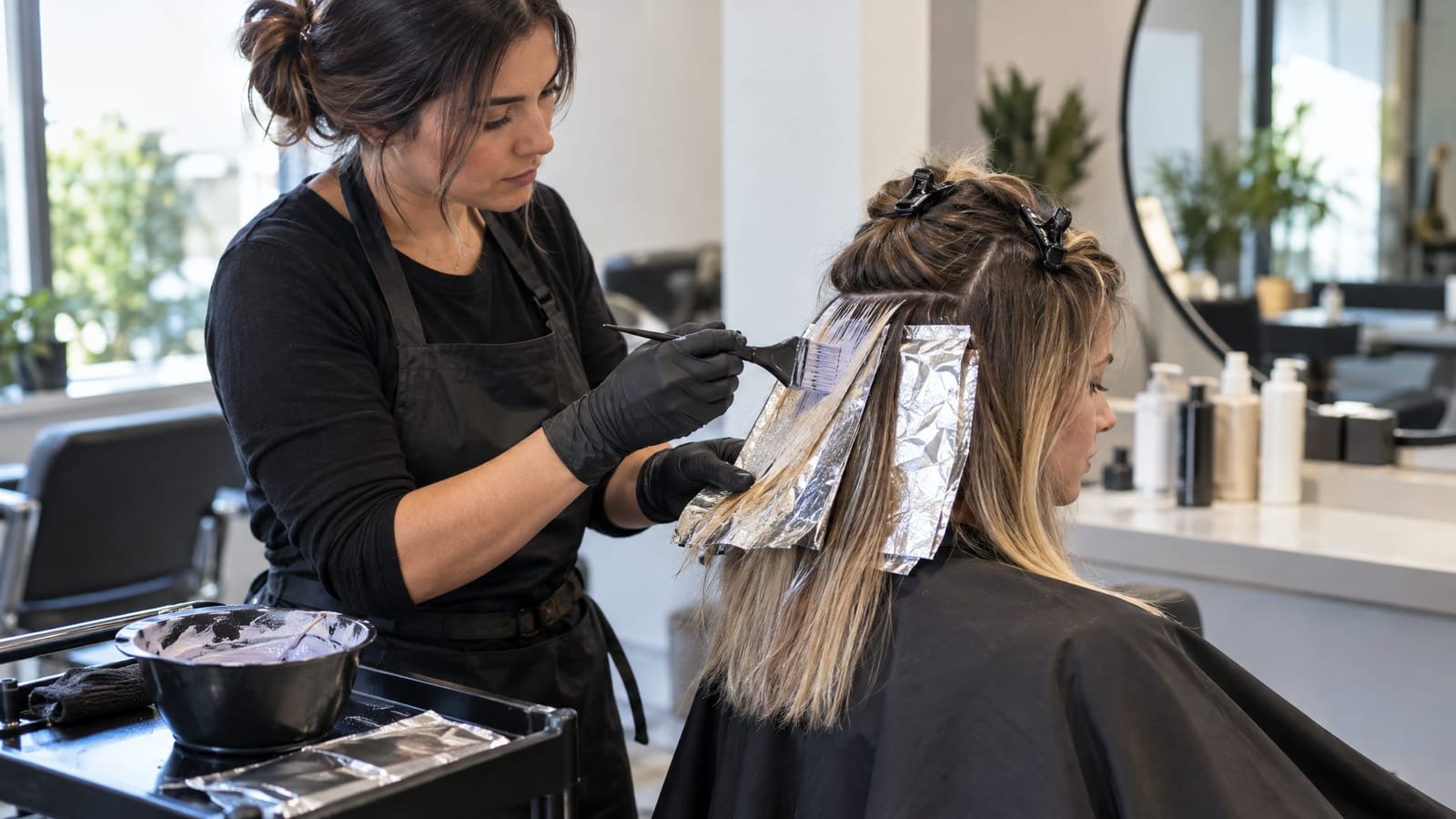
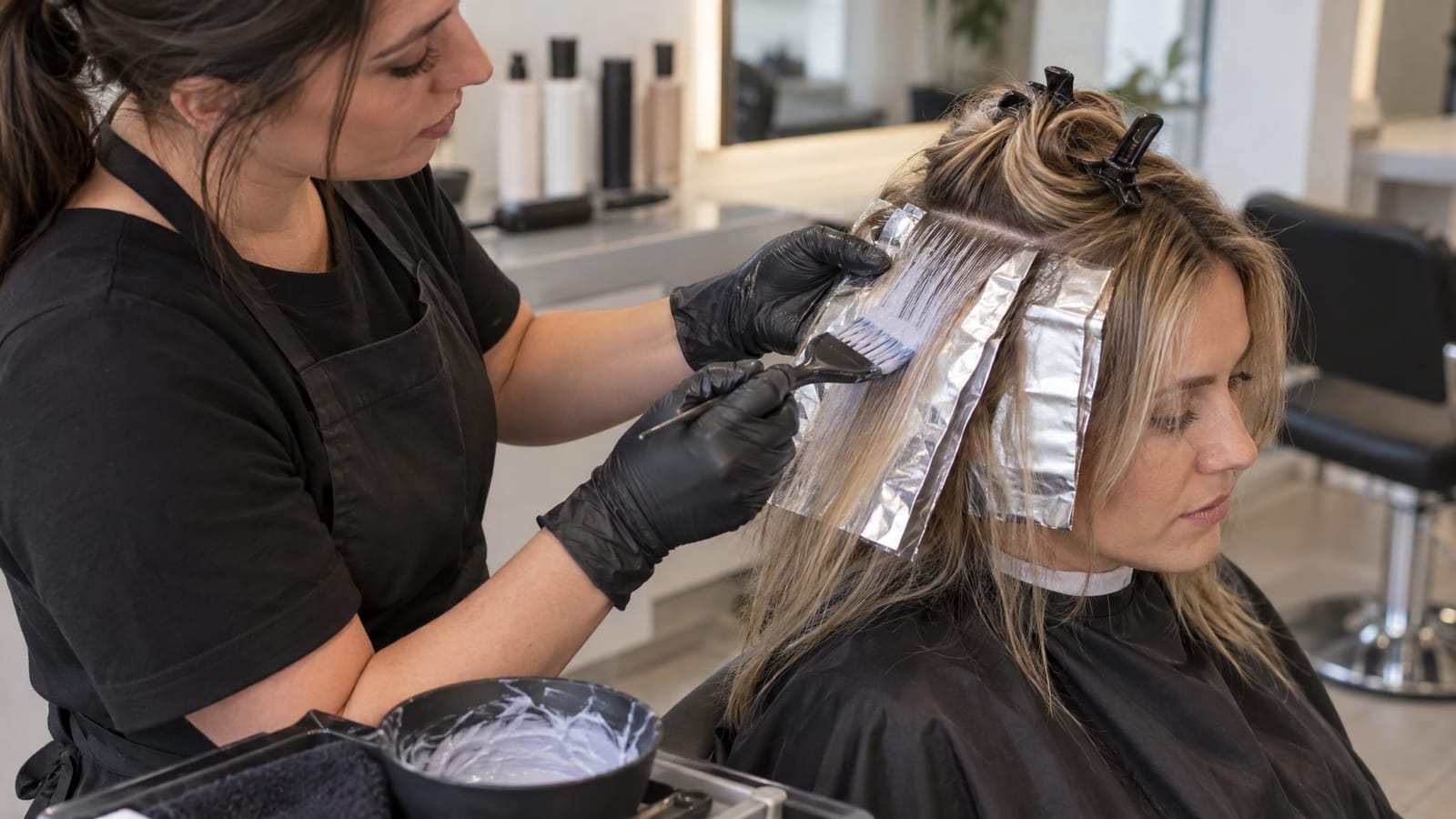
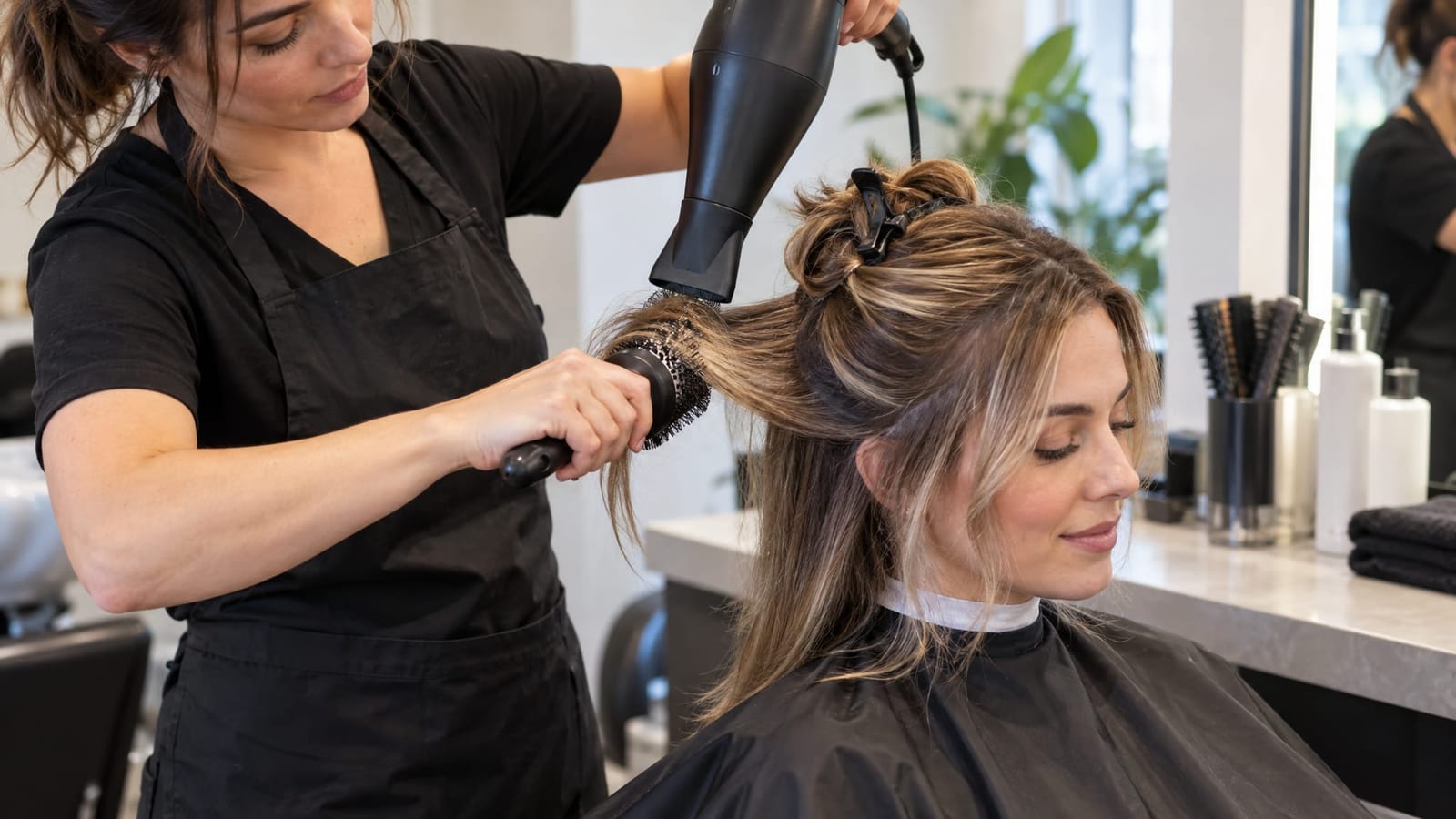
Does Balayage Work on Dark Hair?
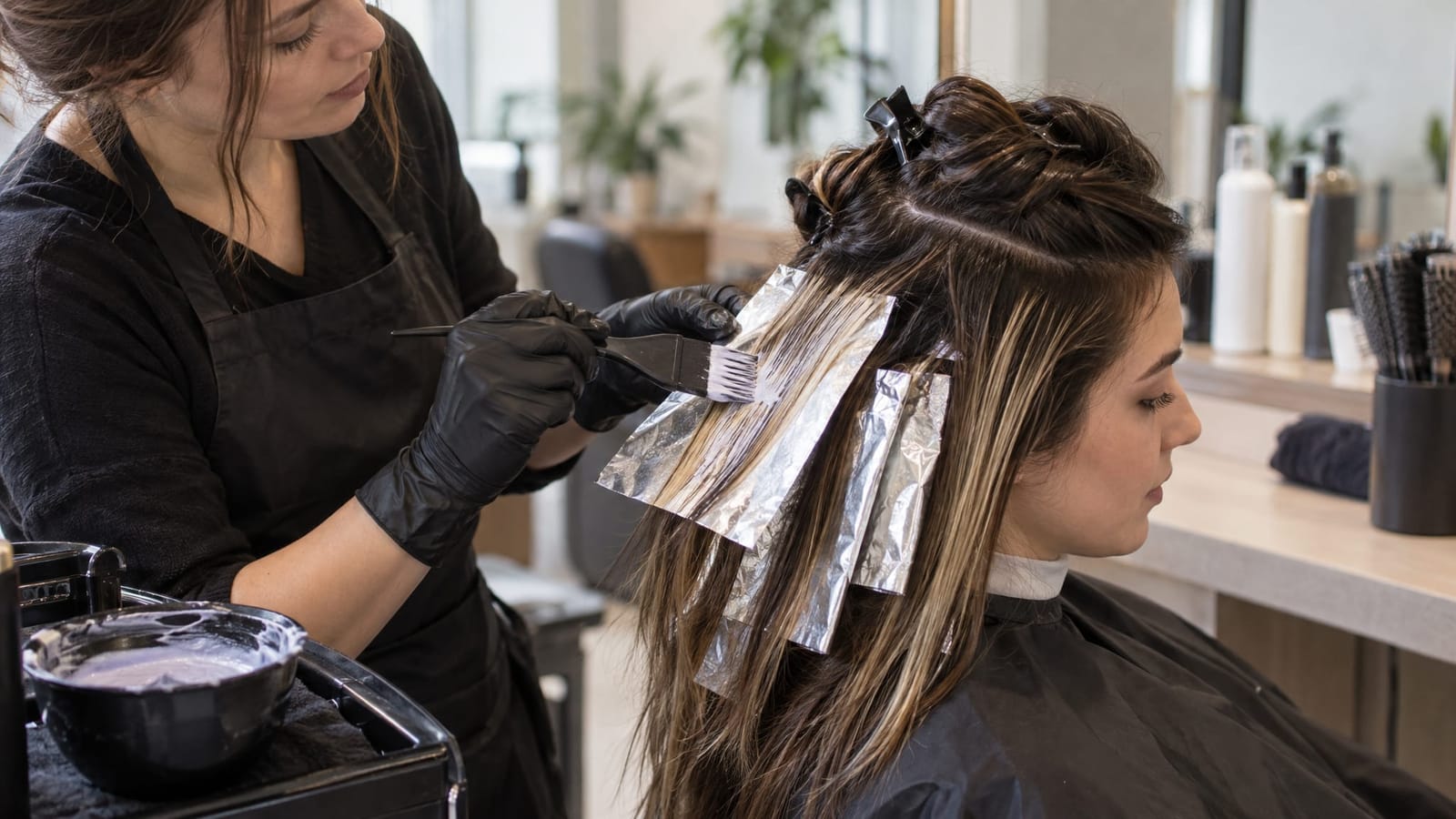
Yes, balayage works on dark brown and black hair. It can add subtle chestnut ribbons, warm caramel accents, or brighter contrast through the lengths while keeping the roots dark. Balayage describes how color is placed, not a particular shade of blonde.
The important distinction is between adding dimension and making a dramatic color change. Balayage on dark hair results depend on your starting shade, previous coloring, hair condition, and desired brightness. A warm brunette result may be achievable in one visit, while very light, cool-toned ends often involve a gradual plan.
What Results Are Realistic in One Session?
A first appointment can create noticeable dimension without turning the hair blonde. The most useful starting point is your current hair, including any color still present through the lengths.
- Natural dark brown hair: Chestnut, caramel, and golden-brown ribbons are practical shades to discuss. The result can stay close to your base or create more visible contrast.
- Natural black hair: Warm brown or chestnut accents offer dimension without requiring pale ends. A brighter blonde target involves substantially more lightening.
- Previously colored dark hair: Existing dye can make lightening less predictable, especially where color has been applied repeatedly. Older ends may respond differently from newer growth.
For example, chestnut ribbons against a black base create a softer change than pale beige pieces around the face. Both are balayage looks, but they require different amounts of lift, meaning how much lighter the hair becomes.
There is no universal appointment count for going lighter. A staged plan allows the target to reflect how the hair responds rather than forcing a particular shade into one visit.
Does Dark Hair Balayage Require Bleach?
For clearly lighter pieces on dark brown or black hair, lightener, commonly called bleach, is usually necessary. Balayage is a placement technique, not a bleach-free alternative to highlights.
Some permanent color can lighten natural, uncolored hair, but it does not reliably lift existing dark dye. A toner or gloss serves another purpose: it adjusts tone rather than creating substantial lightness. A gloss alone will not turn dark lengths into blonde ends.
At Salon Sanaa in Farmington Hills, we offer balayage and toner/gloss services. These address different parts of a color result: balayage creates the placement and contrast, while toner or gloss can refine the shade of the lightened pieces.
Why Warmth Appears When Dark Hair Gets Lighter
Dark hair contains underlying warm pigment. As it lightens, red, orange, and yellow tones become visible. Warmth during the process is normal and does not automatically mean the finished color will look orange.
The final shade depends on both the amount of lift and the tone applied afterward:
- Caramel and honey shades incorporate golden warmth into the finished look.
- Chestnut and copper shades use richer red or orange warmth intentionally.
- Cool beige or ash shades require enough lightening for the intended tone to show without unwanted warmth dominating.
Toner can soften unwanted warmth, but it cannot turn hair that is still too dark into pale blonde. A muted, cool brunette and an icy blonde require very different amounts of lift. Photos are helpful here because “ash” can describe either look.
What Goes Into a Careful Color Plan?
A careful plan balances the desired shade with the condition and coloring history of the hair. Dark-looking hair is not necessarily untouched hair: old permanent color or previous lightening may still be present beneath a darker shade.
Useful details to share during a color consultation include:
- Permanent dye, box color, henna, or color-removing products used on the lengths.
- Previous highlights or bleaching, even if they have since been covered.
- Smoothing, straightening, or other chemical treatments.
- Areas that already feel fragile, break easily, or have heavily processed ends.
A strand test can help a colorist assess how a small section responds before broader lightening. If the hair lifts unevenly or is fragile, a subtler target or staged approach may be preferable to pushing for more brightness.
Conditioning treatments can improve softness and manageability, but they do not erase the effects of chemical processing. Preserving usable length may mean accepting less lift at the first appointment.
Testing, placement, toning, and finishing also affect appointment length. Our explanation of how long balayage takes covers the factors that shape time in the salon.
Choose Placement as Carefully as the Shade
Two people can choose caramel balayage and leave with very different-looking color because the amount and placement of brightness matter.
For a subtle change, narrower ribbons and more untouched dark hair keep the overall impression brunette. Brighter face-framing sections or lighter ends make the change more obvious. Keeping depth between the lightened pieces creates contrast rather than an all-over lighter appearance.
Reference photos are most useful when they show a starting base and texture similar to yours. It also helps to identify what you like: the shade, the bright ends, the soft root transition, or the amount of contrast.
A natural root can make regrowth less noticeable than color that begins at the scalp. That does not make balayage maintenance-free. Tone can fade before the placement needs refreshing, particularly when the goal is cooler than the warmth underneath.
Frequently Asked Questions
Will balayage cover gray roots?
Not by itself. Balayage lightens selected sections rather than providing uniform root coverage. It can help blend some gray visually, but covering gray roots is a separate color goal. We also offer Signature Root Touch Up for root color needs.
Does dark balayage show on both straight and curly hair?
Yes, but texture changes how the placement reads. Straight hair makes transitions and individual ribbons easier to see. Curls distribute the brightness around bends and movement. Photos of your usual styling help communicate how you want the finished color to look day to day.
Will purple shampoo keep dark balayage from looking orange?
Purple shampoo targets yellow tones, not strong orange tones, and it does not lighten hair. It is not a universal solution for brunette balayage. The appropriate tone-maintenance product depends on the shade of the lightened pieces, not simply on having highlights.
The Bottom Line
Dark hair does not need to become blonde for balayage to make a difference. A well-matched shade, thoughtful placement, and realistic lightening goal can create dimension while preserving the depth that makes dark hair distinctive.