Toner & Gloss Treatments: The Secret to Salon-Perfect Hair Color
Toner adjusts the tone of your hair color, while a gloss adds shine and can also refresh or refine the shade. The two often overlap: a tinted gloss can act as a toner. The best choice depends on whether your hair looks too warm, faded, dull, or simply different from the color you want.
At Salon Sanaa in Farmington Hills, we offer toner/gloss treatments to complement our hair color services. Understanding what these treatments can change, and what calls for a different service, helps you choose a refresh that makes sense for your hair.
What Is the Difference Between Toner and Gloss?
Think of toner as describing a color-adjusting job and gloss as describing a shine-focused treatment. They are not always separate products or competing options.
Toner refines the shade
Toner changes the appearance of unwanted or missing tones in the hair. After lightening, that may mean softening yellow or orange warmth. It can also help create a warmer golden blonde, a softer beige, or a more balanced brunette.
Toning does not automatically mean making hair as cool or ashy as possible. A golden blonde can be beautifully toned when warmth is part of the intended result. The goal is a deliberate shade, not the removal of all warmth.
Toner also does not replace lightening. It can adjust the tone of an existing color, but it cannot reliably turn a darker base into a much lighter blonde.
Gloss enhances shine, with or without color
A gloss can be clear or tinted. A clear gloss focuses on shine without intentionally adding a new shade. A tinted gloss deposits color while refreshing the overall appearance of the hair.
For example, a brunette whose color still looks balanced but lacks shine may be interested in a clear gloss. Someone whose brunette has faded toward an unwanted reddish tone may need a tinted formula instead.
The distinction matters because “gloss” does not necessarily mean colorless, and “toner” does not mean blonde-only. The useful question is what the treatment is intended to change.
When Toner or Gloss Makes the Biggest Difference
After highlights or balayage
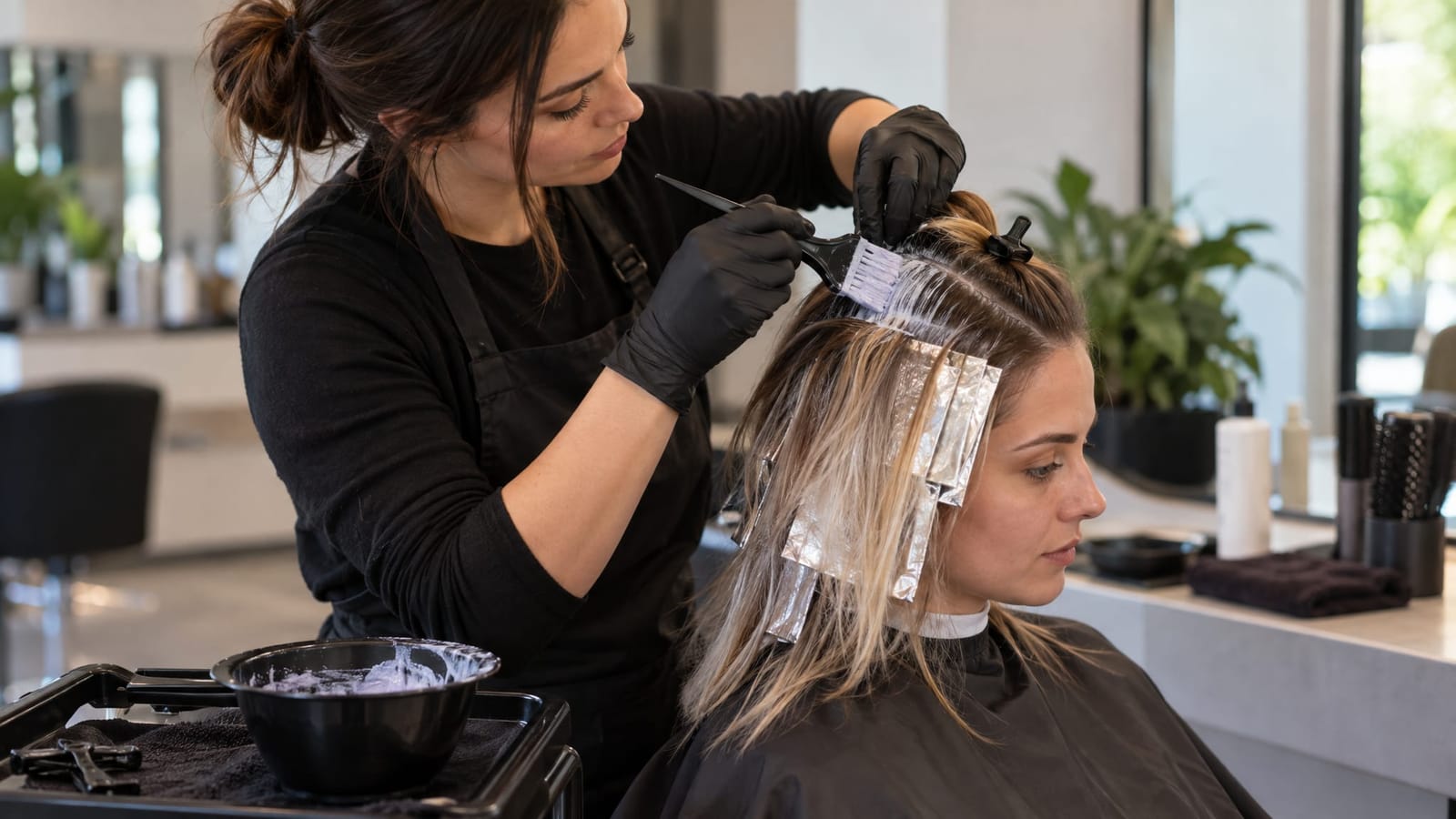
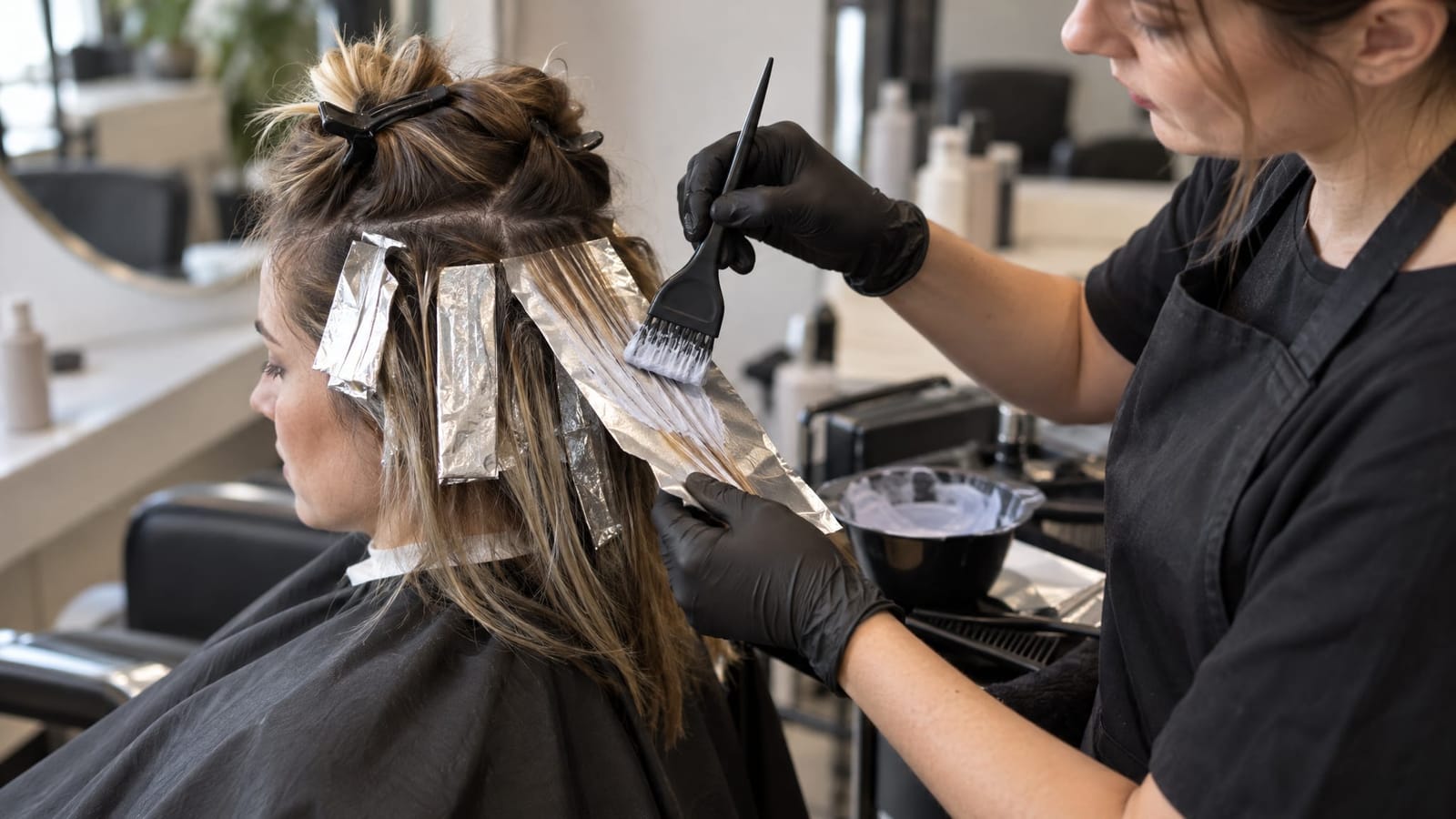
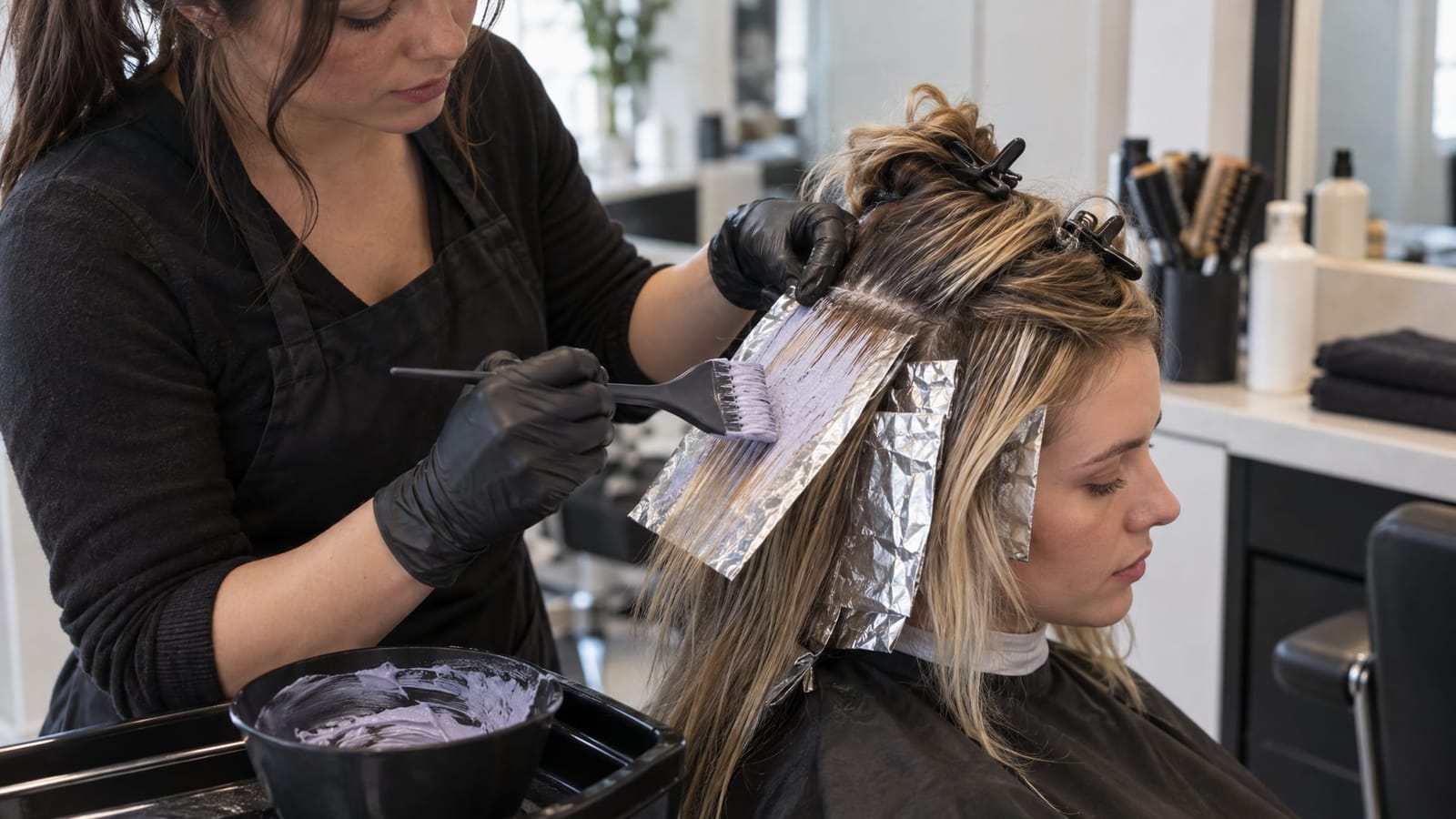
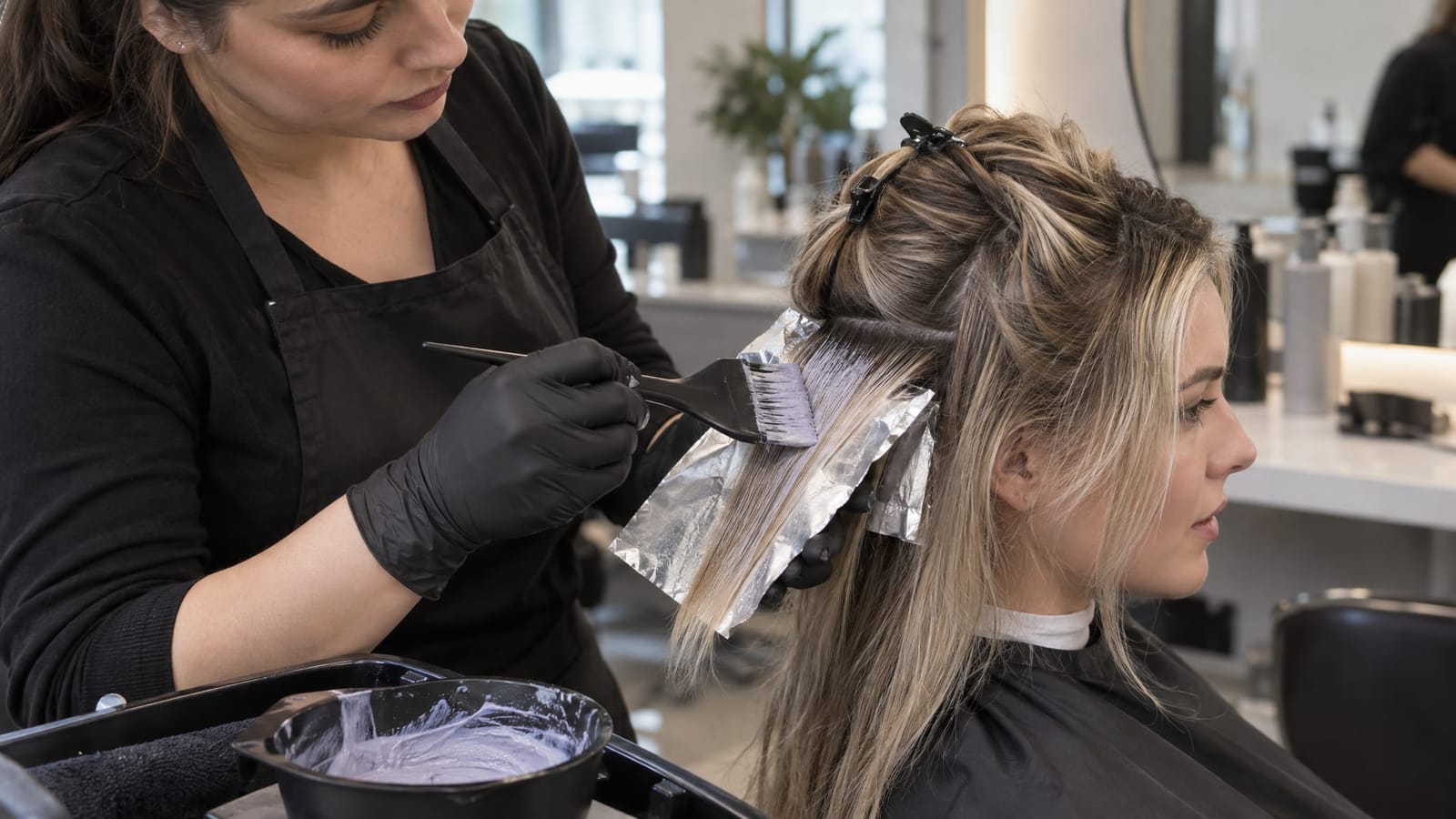
Highlights and balayage create lighter pieces. Toning refines their shade so those pieces suit the intended look.
Consider two people with similarly light highlights. One wants a creamy beige finish; the other prefers a warmer honey blonde. Their starting lightness may be similar, but the tonal goals differ. A suitable toner helps distinguish those finishes.
A gloss can also refresh existing highlights when their placement still looks good but their tone has faded. It will not move the highlights higher or brighten dark regrowth, so it works best when the pattern of light and dark already suits you.
After bleaching
Bleaching removes pigment and exposes underlying warmth. Toning can then refine that warmth toward the desired result. This is why lightening and toning have different roles in a bleach-and-tone service.
The lightness achieved sets the limits for the final shade. If hair remains too dark or orange for a pale blonde goal, toner alone cannot bridge that difference. Adding a cooler tone may mute warmth, but it can also make the result look deeper rather than brighter.
That distinction helps explain why “more toner” is not always the answer when blonde hair does not look light enough.
When existing color looks faded
A tinted gloss can replenish tone in previously colored lengths without treating every refresh as a complete color change. It may restore richness to a faded brunette or refresh a copper shade that has lost its warmth.
A tonal refresh is most useful when you still like the overall color and placement. If your goal has changed from a warm brunette to a much lighter blonde, that is a different color project.
When shine is the main concern
If you like your shade but want a more polished finish, a clear gloss may fit the goal better than adding more pigment. A tinted treatment can alter depth or tone, so it is worth separating “I want more shine” from “I want a different color.”
Gloss is not a substitute for conditioning, trimming split ends, or addressing breakage. Shine and hair condition are related, but they are not the same thing.
When Another Color Service Is the Better Match
Toner and gloss are useful finishing and maintenance tools, but they cannot solve every color concern.
- Visible regrowth or gray coverage: A gloss may soften contrast or blend some gray, depending on the formula, but it is not interchangeable with dedicated root coverage. Our overview of a signature root touch-up in Farmington Hills explains that service’s role.
- More lightness or a different highlight pattern: Toner cannot add new lightened pieces. Comparing all-over color, partial highlights, and full highlights helps distinguish an overall shade change from added dimension.
- Uneven bands, patchy color, or a major unwanted result: A gloss may refine a small tonal issue, but it does not necessarily correct differences in depth. These concerns may call for hair color correction in Farmington Hills rather than a simple refresh.
A useful distinction is whether the problem involves tone, depth, or placement. Toner primarily addresses tone. If the concern is how dark the hair is or where the lighter sections sit, another service may be needed.
What Shapes a Toner or Gloss Choice?
The shade name is only part of the decision. The same formula can look different on hair with different starting colors and color histories.
Your starting color and desired finish
“Brighter” can mean lighter, less brassy, or more reflective. Those goals are not identical. A very cool toner may reduce yellow warmth while making blonde appear smokier or slightly deeper.
Reference photos are useful when paired with specific preferences: creamy rather than silver, golden rather than copper, or richer without looking darker. That language helps separate a tonal preference from a request for more lightness.
Previous color and hair porosity
Previously lightened ends can absorb and release color differently from less-processed hair closer to the roots. This is one reason a uniform application does not always produce a uniform-looking result.
Useful details to share with your stylist include previous lightening, at-home color, color-depositing products, and areas that tend to fade quickly. These details help shape the color plan without relying on the current appearance alone.
How Toner and Gloss Help Maintain Color Between Services
Toner and gloss gradually fade. How long the finish stays noticeable depends on the formula, your hair’s condition, washing habits, and the difference between the starting tone and the finished shade.
Rather than treating maintenance as a fixed calendar rule, watch what changes first:
- Unwanted warmth returns: A tonal refresh may be useful while the highlight placement still works.
- The shade looks balanced but dull: Shine and conditioning may deserve more attention than additional pigment.
- Roots become the main concern: Refreshing the lengths alone will not address new growth.
- The color looks too dark or muted: Adding more tinted product may work against the desired result.
These treatments can extend the period when an existing color service looks polished by refreshing its finish between larger appointments. They do not stop regrowth or permanently prevent fading. The benefit is maintaining the color you already like without automatically repeating every part of the original service.
How to Care for Toned or Glossed Hair
Consistent home care helps preserve the finish. A complicated routine is less useful than choosing products and habits that match your hair.
- Use shampoo intended for color-treated hair. Wash according to your scalp and styling needs rather than adding unnecessary washes.
- Keep water comfortably warm rather than very hot. A gentler washing routine supports color maintenance without requiring cold showers.
- Condition regularly. Focus on lengths and ends, choosing a formula that provides softness without weighing down your hair.
- Limit unnecessary heat exposure. Use a heat protectant as directed and avoid repeated passes with hot tools over the same section.
- Use color-depositing products selectively. Purple shampoo targets yellow tones, while blue products target orange tones. Neither is a universal solution for every brunette or blonde.
More pigment does not always produce a better finish. Frequent use of a strong toning shampoo or mask can leave porous sections looking overly cool or uneven. Follow the product directions and your stylist’s guidance rather than using a depositing product at every wash by default.
Is a Toner or Gloss Worth Adding to Your Routine?
A toner or gloss makes the most sense when the change you want matches what it can deliver: refined tone, refreshed richness, or added shine. It is less useful when the real goal is lighter hair, fuller root coverage, or correction of uneven color.
For a closer look at the decision, our explanation of whether a hair gloss treatment is worth it explores where a gloss fits into color maintenance.
The key is choosing the treatment for the result, not the label. Sometimes the finishing touch is a cooler tone; sometimes it is warmth, richness, or shine without a shade change.