Color & Blow-Dry Services: Beautiful Color With a Finished Style at Salon Sanaa
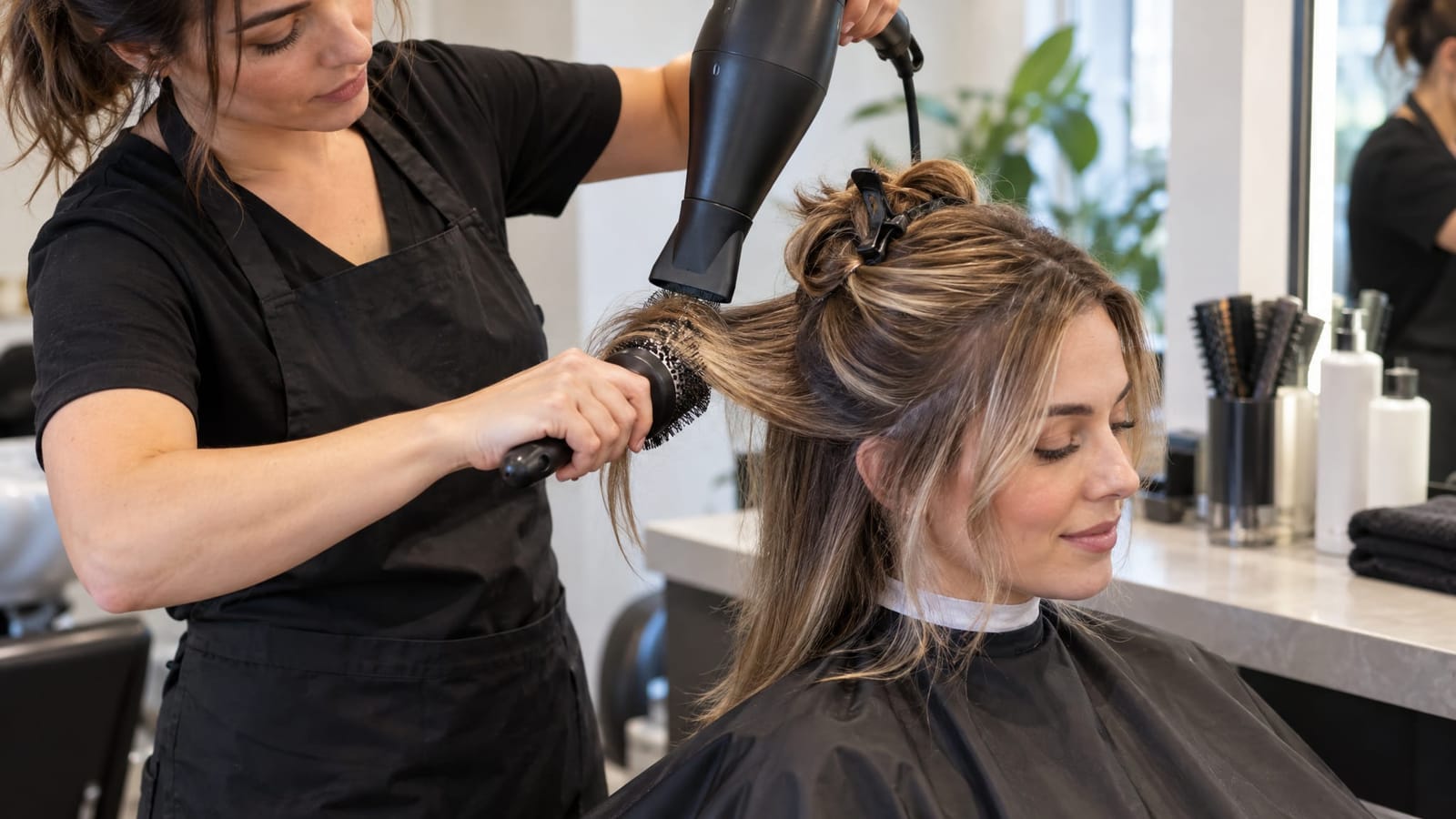
A color and blow-dry appointment combines your color service with professional drying and styling, so you leave with a complete look rather than wet hair. It also makes it easier to see the finished shade, how the color blends, and where lighter or darker pieces sit within your hairstyle.
At Salon Sanaa in Farmington Hills, we offer Color & Blow-Dry alongside services such as root touch-ups, all-over color, highlights, and toner/gloss. The right choice begins with the color change you want, followed by a finish that suits your texture and everyday routine.
One distinction matters from the start: a blow-dry helps showcase your color, but it does not lock pigment into the hair or prevent fading. Its value is in the finished appearance, the opportunity to assess the result, and the convenience of having color and styling handled together.
What You Gain by Combining Color and Styling
After a color service, styling brings the separate elements of your look together. Root volume changes how the hair falls around your face. A smooth finish makes tonal transitions easier to follow. A rounded bend gives layers movement and reveals color that might otherwise sit underneath.
The convenience is practical, too. Combining the services removes the need to dry and style your hair at home immediately after your appointment. That matters when you have plans afterward or simply want to enjoy the finished look without another step.
The most useful way to judge the value is by what the appointment accomplishes:
- Your color goal: covering new growth, refreshing a shade, or creating dimension.
- Your finished look: smooth and polished, softly shaped, or fuller through the roots.
- Your home routine: whether the finish relies on tools and techniques you want to use regularly.
A style that looks beautiful in the salon but requires more daily work than you want is a different choice from a finish designed around a quick morning routine.
Choose the Color Service Before Choosing the Finish
“Color and blow-dry” describes the combination, but the color work still needs to match your starting point. Styling cannot substitute for the right color technique.
New growth with lengths you already like
If your concern is visible roots and the rest of your shade still suits you, a root-focused service is the relevant starting point. Applying color throughout the lengths is not automatically necessary at every visit. Our explanation of a signature root touch-up in Farmington Hills covers how that service differs from a broader color refresh.
For example, someone who likes their brunette lengths but wants new growth blended has a different goal from someone wanting the entire head noticeably darker.
A consistent shade or added dimension
All-over color is generally used to create or refresh an overall shade. Highlights lighten selected sections, creating contrast rather than a uniform result. Partial and full highlights differ in coverage, not simply in how blonde the final look will be.
Our comparison of all-over color, partial highlights, and full highlights explains those choices in more detail. The distinction matters because a blow-dry reveals the placement, but does not create the dimension itself.
Uneven color or a major change
Dark bands, patchy lightness, or several layers of previous dye call for a different conversation than routine maintenance. A polished finish will not correct uneven underlying color. Our guide to hair color correction in Farmington Hills explains why these changes need an individual plan rather than a standard refresh.
What Happens During a Color and Blow-Dry Appointment?
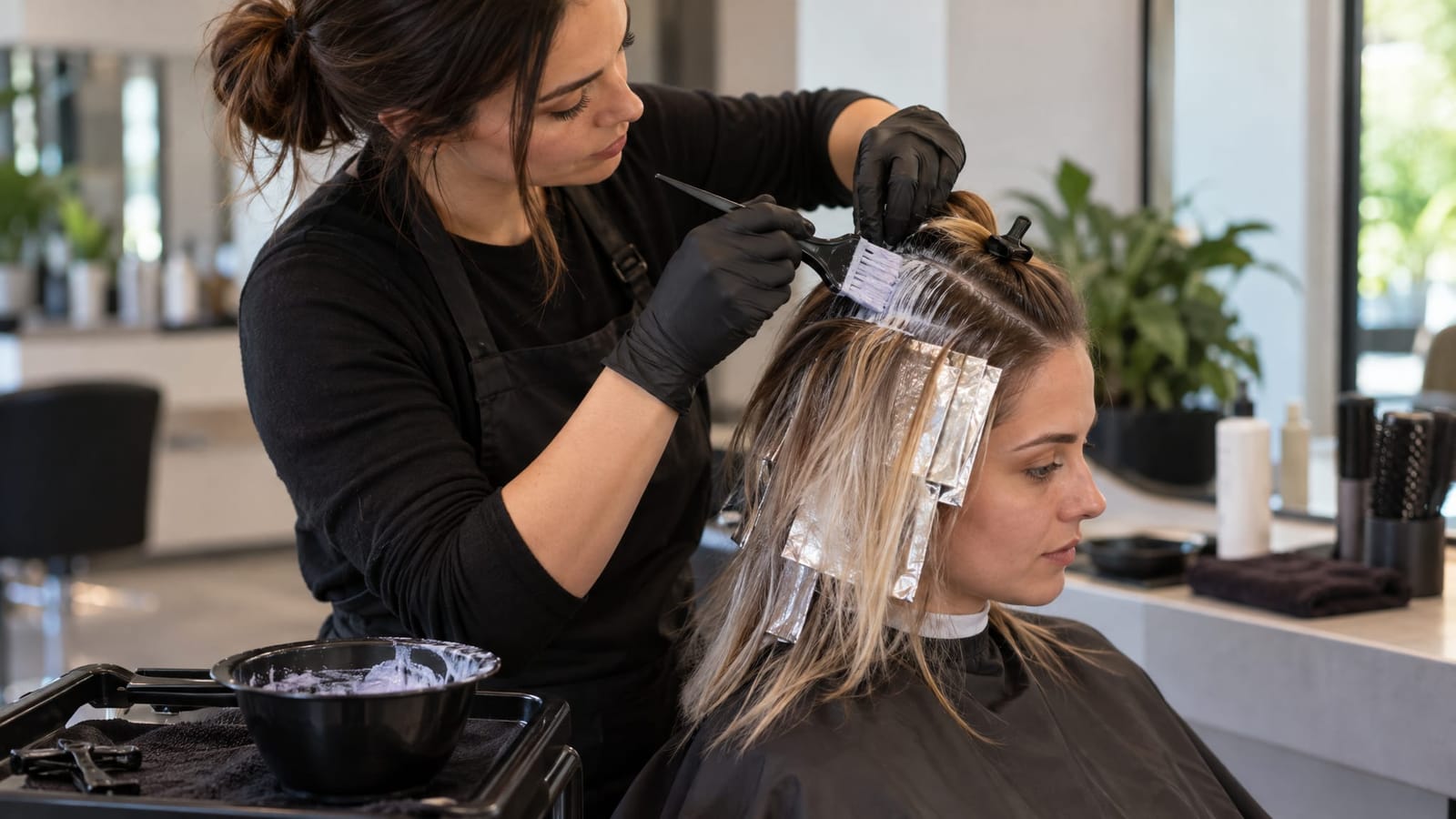
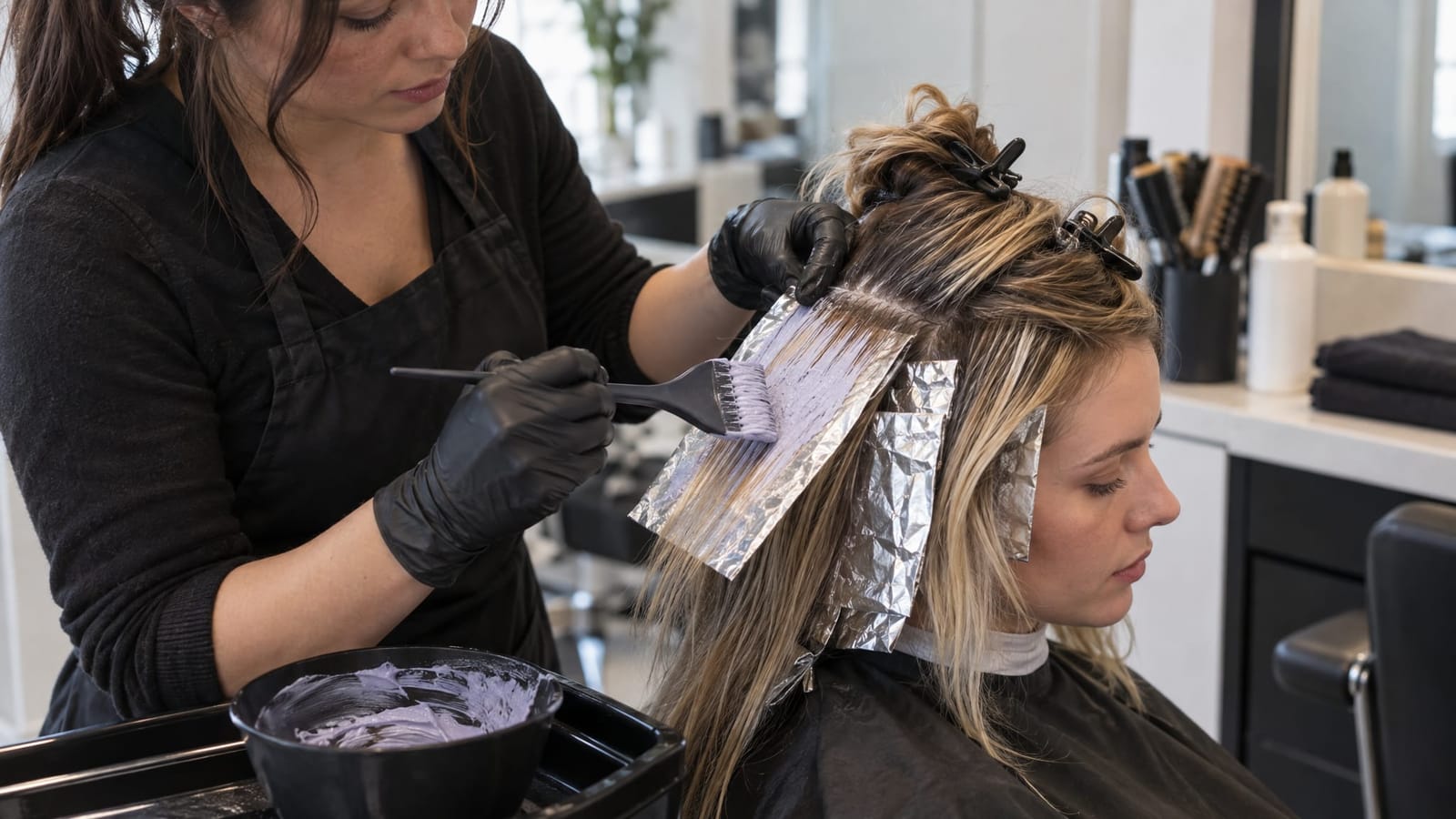
The details depend on the color service, but the appointment generally moves from discussing the goal to applying color, rinsing, and creating the finished style.
Clarifying the color and styling goals
A useful color discussion includes your current shade, previous coloring, and the amount of upkeep you want. Mention at-home dye, earlier lightening, and smoothing services, including work that remains on the lengths even if it happened some time ago.
Reference photos help most when you explain what you like about them. “I like the warm brunette shade, but not the blonde pieces” gives clearer direction than a photo alone. Separate color inspiration from styling inspiration if necessary.
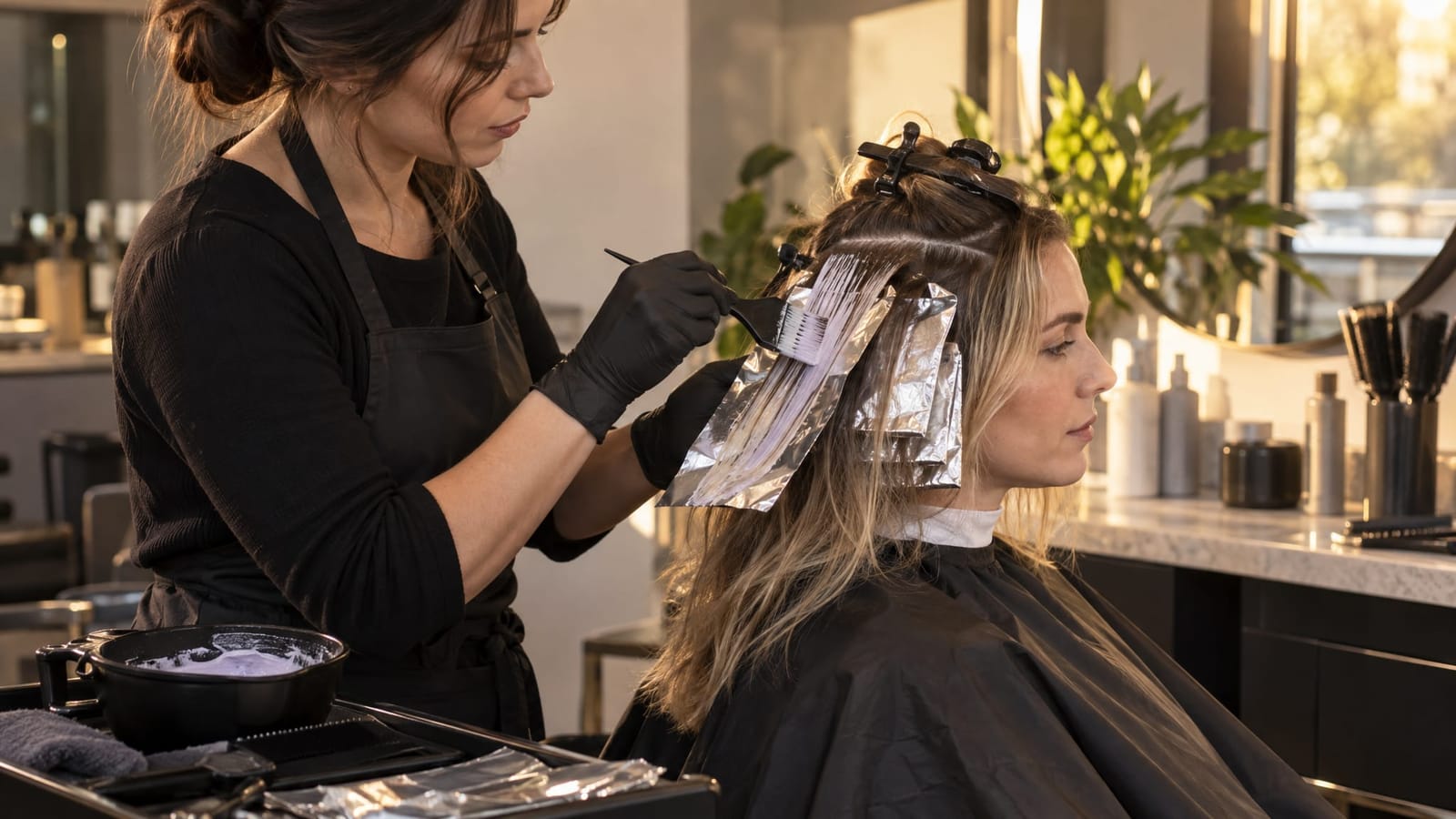
Applying and processing the color
Placement follows the goal. Root color focuses on new growth, while highlights work through selected sections. A toner or gloss serves a different purpose, such as refining tone, rather than replacing every other color technique.
Color processing and drying are separate stages. Once the color stage is complete and the hair is rinsed, the focus shifts to the finish.
Drying, shaping, and reviewing the look
A professional blow-dry uses sectioning, airflow, brush choice, and tension to shape the hair. The technique changes with the desired result: lifting roots for volume, smoothing lengths for a sleeker look, or turning the ends for a softer outline.
Once dry, the hair gives a clearer view of how the color works with your part, layers, and face-framing sections. This is also a useful point to discuss which parts of the style are realistic to recreate at home.
Why the Blow-Dry Matters for Appearance, Not Color Longevity
Wet hair often looks darker and groups into sections, making it harder to judge the finished shade and blend. Drying separates those sections and reveals how the color reads in a wearable style.
The finish also affects light reflection. Smoother alignment can make hair appear glossier, while bends and waves reveal alternating lighter and darker areas. That is a styling effect, not a change in the underlying color.
A blow-dry does not make the color permanent, repair uneven placement, or guarantee that the shade will last longer. Color maintenance depends on factors such as the coloring process, washing routine, heat use, and the condition of the hair.
That distinction keeps expectations realistic: professional styling helps you see and enjoy the result, while ongoing care helps maintain it.
Match the Finish to Your Texture and Routine
Choose the finish by how you want your hair to move, not just how sleek it looks in a photograph.
- Smooth and polished: A sleeker finish emphasizes the overall shape and makes color transitions easier to see. Naturally textured hair generally requires more styling effort to recreate this look.
- Lift through the roots: Volume changes the silhouette without requiring tightly curled ends. It suits a preference for fullness rather than a flat, straight finish.
- Rounded ends and soft movement: A shaped blow-dry gives layers direction and creates a gentle bend. It is different from a defined curl pattern.
- Waves or defined curls: More structured shapes often involve an iron after drying. A reference photo helps distinguish a blow-dry finish from a look that requires additional styling work.
For curly or coily hair, distinguish between wanting the texture stretched and wanting the natural curl pattern preserved. Those are different styling goals, even when the color inspiration is identical.
A blow-dry is also different from a smoothing treatment. A blow-dry temporarily shapes the hair; Brazilian Blow Out and Organic Smoothing Treatment are separate services on our menu, not interchangeable names for a finished style.
Care for the Color Separately From the Style
The blow-dry and the color have different maintenance needs. Humidity, sleep, and washing change a temporary style. Color gradually changes through wear and ongoing care.
A practical home routine focuses on a few manageable habits:
- Choose cleansing and conditioning products suited to colored hair. Match them to your texture and scalp needs rather than relying on a “color-safe” label alone.
- Avoid unnecessary repeated heat styling. Refreshing one section takes less work than restyling the whole head every morning.
- Use heat-protection products according to their directions. Protection is not a reason to increase tool temperature or repeat passes.
- Treat toning products as color products. Purple and blue shampoos alter tone; they are not universal choices for every blonde or brunette shade.
- Plan maintenance around the actual change. Visible new growth, fading tone, and highlight placement are different reasons for a follow-up service.
If recreating the finish feels difficult, identify the part that matters most. Root lift, a smooth fringe, or softly turned ends may deliver the look you want without reproducing every salon styling step.
Prepare the Details That Make Appointment Planning Easier
When planning a combined appointment, describe both the color goal and the finish. “Cover my new growth and finish smooth” communicates a different service need from “lighten my dark lengths and create defined waves.”
Useful details include your previous color history, hair length and density, reference photos, and any fixed plans afterward. Appointment length depends on the color work as well as the drying and styling involved. A routine root refresh and a significant color change are not equivalent bookings.
It also helps to distinguish the essentials from preferences. If maintaining your current shade is essential but extra volume is optional, say so. If the finish needs to work with your natural texture at home, make that part of the discussion from the beginning.
The best combination is not simply fresh color plus an elaborate style. It is the right color service, a finish that shows it clearly, and a routine that fits how you actually wear your hair.