Bleach and Tone in Farmington Hills: Process, Blonde Shades, and Aftercare
Bleach and tone is a two-part color service: lightener removes pigment from the hair, then toner refines the resulting blonde into a cooler, neutral, or warmer shade. It can create an overall blonde look, including platinum, ash, or sandy blonde, but the achievable result depends on your starting color, previous treatments, and hair condition.
At Salon Sanaa in Farmington Hills, we offer Bleach & Tone alongside Toner/Gloss and Color Correction services. Understanding the differences helps you choose a service that fits both your color goal and your maintenance routine. The most important expectation is simple: reaching a lighter shade matters, but preserving workable hair condition matters just as much.
What Makes Bleach and Tone Different From Other Color Services?
Lightener and toner have different jobs. Lightener breaks down pigment, exposing underlying warmth as the hair becomes lighter. Toner adjusts that exposed color, softening unwanted warmth or adding the beige, gold, pearl, or ash character of the finished shade.
Toner cannot turn an insufficiently lightened orange base into platinum. The hair first needs to reach a suitable level of lightness for the intended result.
- Bleach and tone: Lightens the intended area and then refines its tone, often for an overall blonde result.
- Highlights: Lighten selected strands while leaving other hair darker, creating contrast and dimension.
- All-over color: Applies color throughout the hair, but does not necessarily involve bleaching or achieve the same degree of lightening.
- Toner or gloss: Adjusts tone on an existing base rather than replacing the lightening step.
If you want brightness without an all-over blonde commitment, our comparison of all-over color, partial highlights, and full highlights explains those alternatives.
Is Your Hair a Good Candidate?
Candidacy is not simply a question of whether your hair is dark or light. Two people with the same visible color can need very different plans because of what is underneath it.
Previous color affects the route to blonde
Permanent dye, repeated dark color, old highlights, and overlapping touch-ups can leave different amounts of pigment along the same strand. Faded color still matters, even when it no longer looks freshly dyed.
A useful consultation includes your color history and any chemical straightening, relaxing, or smoothing treatments. Mention henna and at-home products by name when possible. Photos of earlier color changes can help explain where previously treated hair begins.
Condition matters as much as the starting shade
Existing breakage, fragile ends, and uneven porosity affect how much additional processing the hair can tolerate. Porosity describes how readily hair absorbs and releases moisture and products. More porous sections can also absorb toner differently, creating an uneven finish.
Texture alone does not determine suitability. Fine hair, coarse hair, curls, and straight hair all need an assessment of the individual strands and treatment history. Length priorities matter too: maintaining long, previously lightened ends may mean choosing a less dramatic change.
Our bleach and tone candidacy guide explores how starting color, condition, and previous services affect the decision.
What Happens During a Bleach and Tone Service?
The application plan differs for untreated hair, previously colored hair, and blonde regrowth. A professional service involves more than applying one formula everywhere.
Consultation and strand testing
The consultation translates an inspiration photo into specific choices: overall lightness, warmth or coolness, root appearance, and acceptable maintenance. A bright platinum photo and a softly blended beige blonde photo may both look “blonde,” but they require different plans.
A strand test processes a small section to assess how the hair lightens and how its condition responds. It is particularly useful when the hair has previous color or an uneven treatment history. The test helps identify resistant pigment, unexpected warmth, or fragility before a broader application.
It informs the plan rather than guaranteeing that every section will behave identically.
Sectioning and lightener application
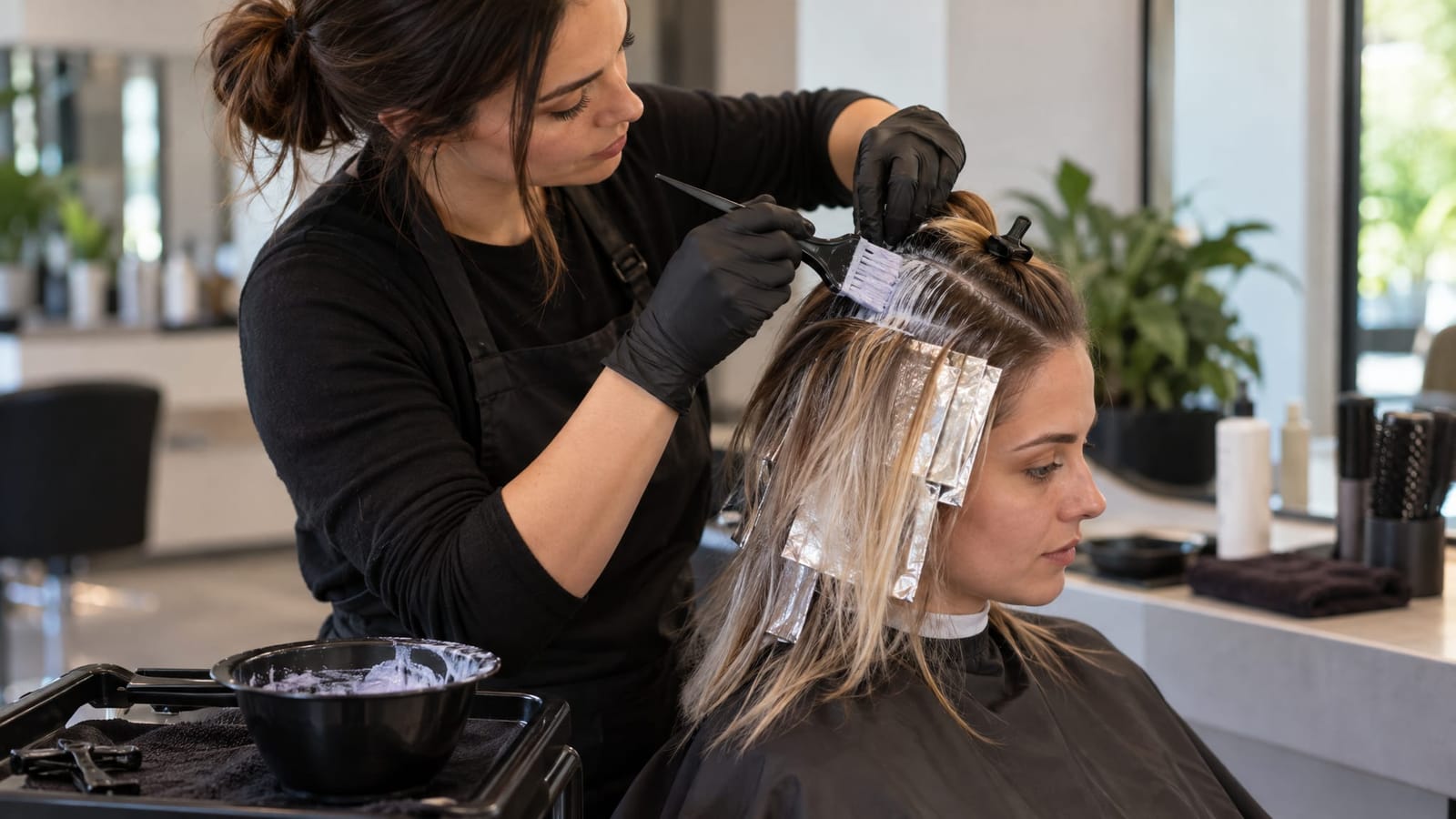
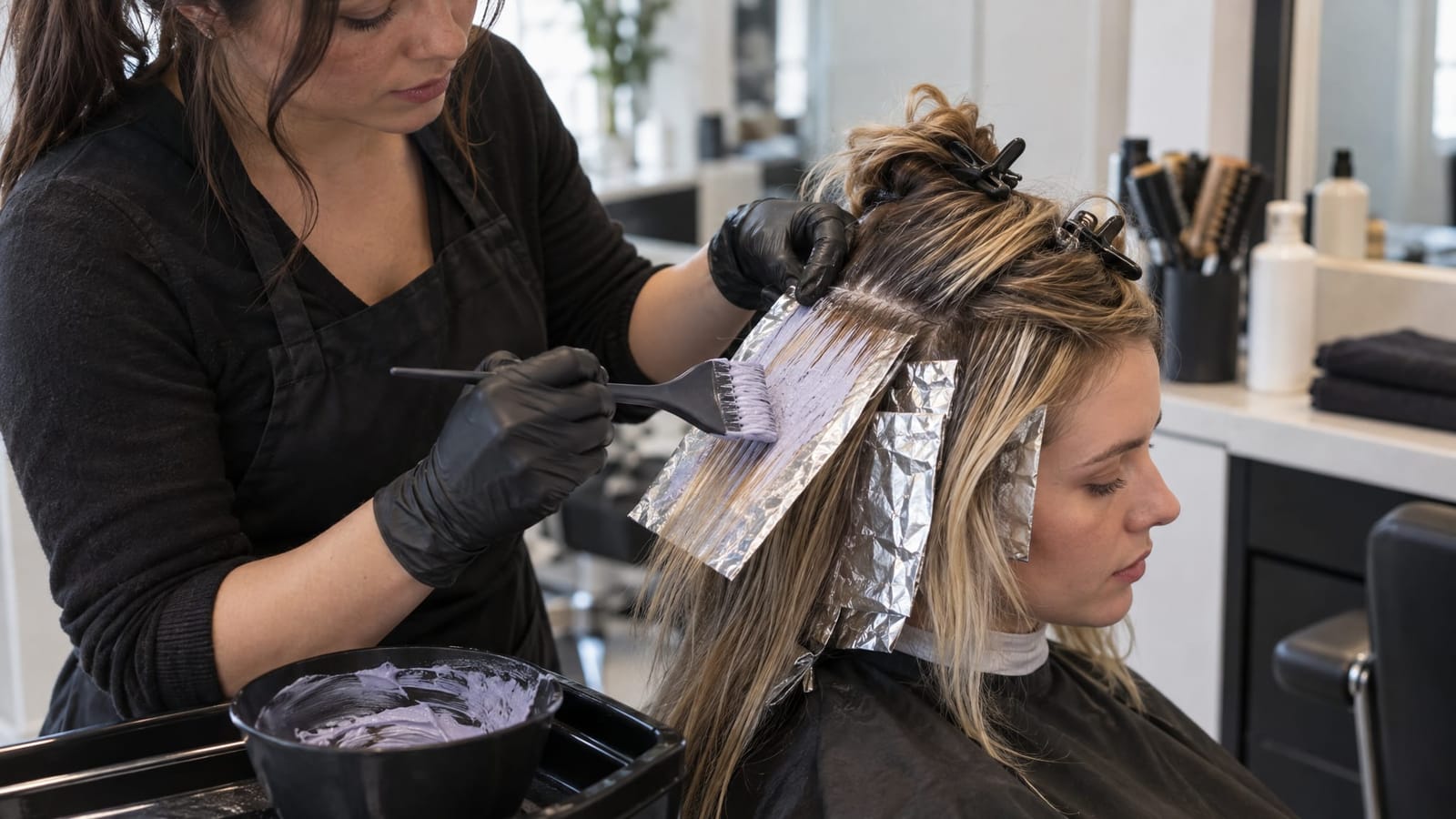
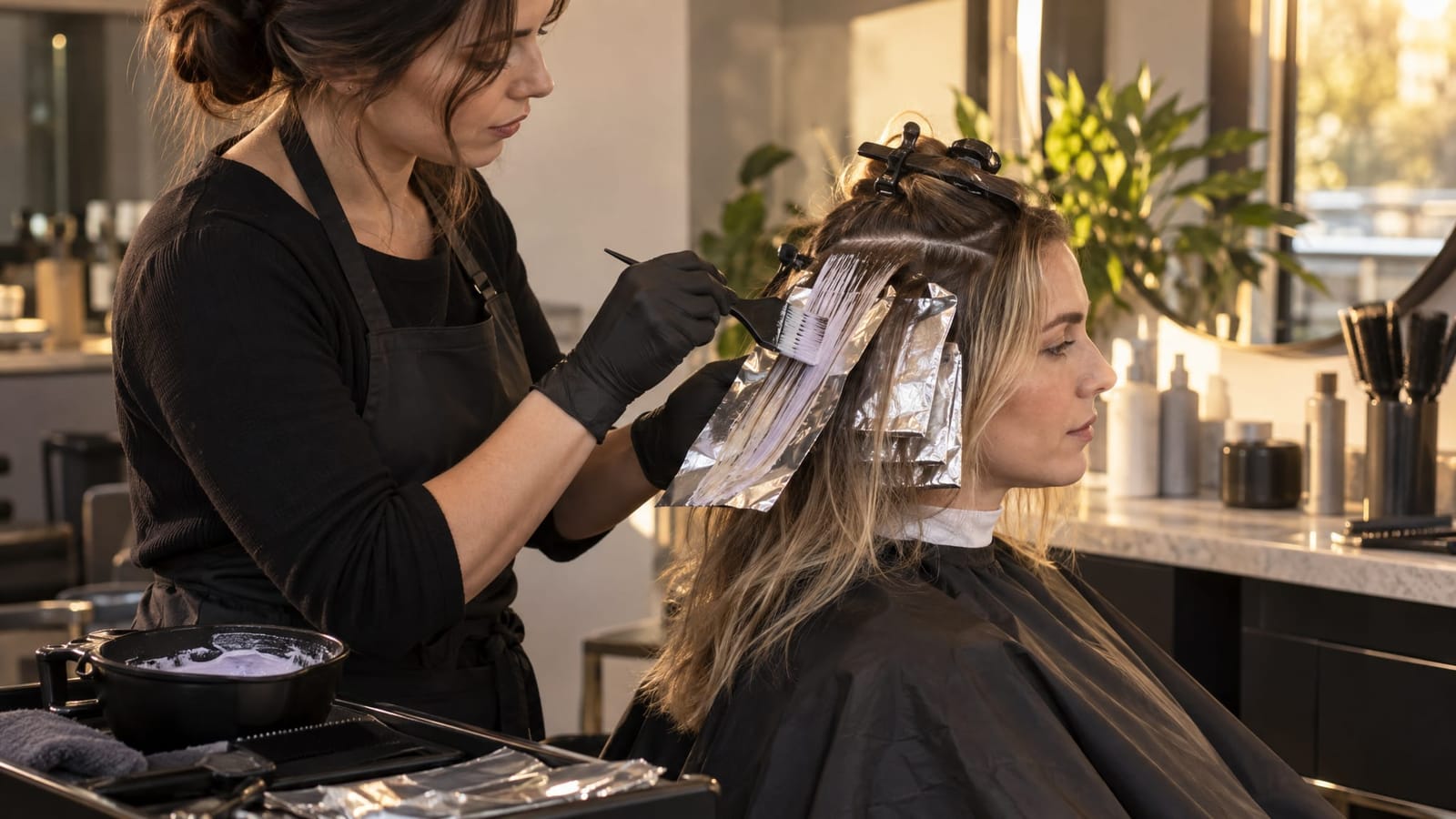
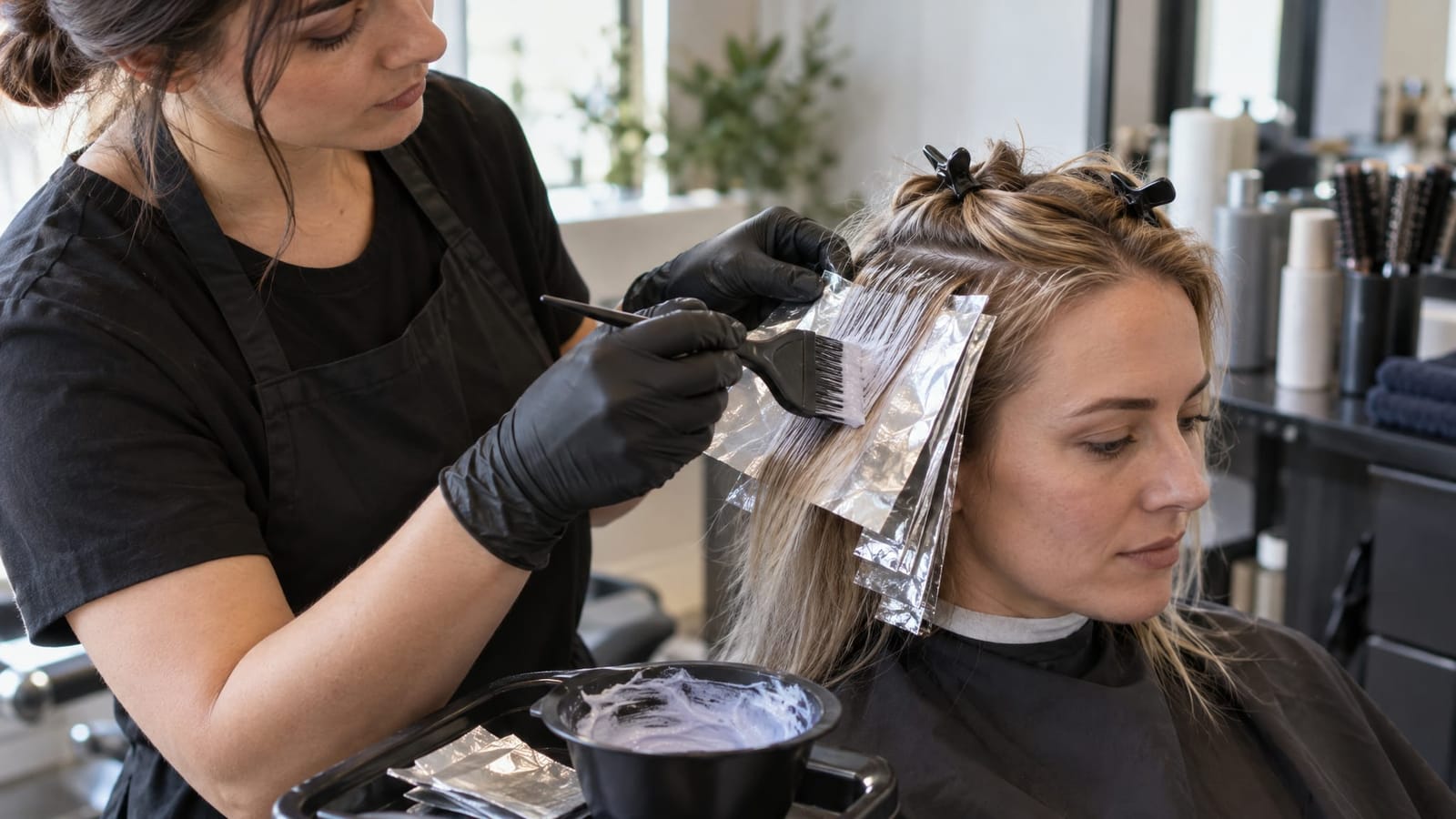
Careful sectioning supports controlled coverage. Application order matters because the root area, midlengths, and ends do not always lighten at the same rate. Heat from the scalp can make the root area process faster than the lengths.
Previously lightened ends require particular care. Applying fresh lightener over them unnecessarily adds processing to hair that has already undergone a substantial chemical change. For a regrowth service, the focus is new growth rather than automatically bleaching the entire length again.
Monitoring the lift and hair condition
During processing, both color development and strand condition guide the next step. The goal is not to keep processing until the hair matches a photo regardless of its response.
Reducing avoidable damage comes from the combination of assessment, appropriate product selection, controlled placement, and stopping at a suitable point. Bleaching changes the hair structure, so no lightening method makes the process damage-free.
Rinsing, toning, and finishing
After the lightener is removed, toner refines the base that has actually been achieved. Its selection accounts for remaining warmth, porosity, and the desired finish.
Conditioning and styling complete the service. Viewing the finished hair dry helps show the overall tone and any differences between the roots and lengths.
Choosing Between Platinum, Ash, and Sandy Blonde
These shade names describe different qualities. Platinum mainly describes very high lightness, while ash describes a cool tonal direction. Sandy blonde usually combines beige and soft golden elements.
- Platinum blonde: Requires a very pale base. It makes dark regrowth noticeable and leaves little room for residual orange or strong yellow warmth.
- Ash blonde: Uses cool tones to soften warmth. It can exist at different blonde depths and may appear more muted or slightly darker than a golden blonde at a similar level.
- Sandy blonde: Balances beige and gentle warmth. It offers a softer alternative to icy blonde, though it still needs a sufficiently light and even base.
Choose reference photos with similar starting depth and show examples of tones you dislike. “Not too yellow” is useful, but it does not necessarily mean you want gray or strongly ashy hair. Natural-light photos also make shade differences easier to discuss than heavily filtered images.
What Is Realistic in One Session Versus Several?
A single session is more plausible when the starting hair is already relatively light, has little artificial pigment, and is in suitable condition. A major change from repeatedly dyed dark hair presents a different challenge.
For example, moving from untreated dark blonde to a lighter beige blonde is generally a less complex change than taking layered dark brown dye to platinum. The second goal involves removing artificial pigment and managing uneven bands as well as reaching sufficient lightness.
Multiple sessions can divide a larger change into stages. An initial result might be a deeper, warmer blonde rather than the final pale shade. Each stage provides another opportunity to assess whether further lightening is appropriate.
Spacing appointments does not reverse existing chemical damage, and additional sessions do not guarantee that every target shade becomes suitable. Sometimes the better tradeoff is a warmer blonde, more dimension, or less lightening on fragile lengths.
If old dye, orange bands, or uneven bleaching are part of the starting point, hair color correction may better describe the work than a straightforward bleach and tone service.
Aftercare That Supports Blonde Color and Manageability
Aftercare has two separate jobs: keeping the tone looking intentional and helping processed hair remain manageable. A product that adjusts yellow tones does not replace conditioning, and a conditioning mask does not replace toner.
Cleanse and condition without overcorrecting the color
A gentle cleansing routine and conditioner suited to your texture help manage lightened hair. Adjust washing to your scalp and styling needs rather than following a rigid schedule.
Purple shampoo can soften yellow tones, but using it too often can leave pale or porous areas looking dull, violet, or uneven. It also does not solve every type of brassiness. Orange patches and visible color bands need a different assessment from a soft yellow cast.
Follow the product directions, and treat pigmented shampoo as a tone-maintenance tool rather than an automatic choice for every wash.
Limit unnecessary heat and friction
Gentle detangling, starting at the ends, reduces tugging on processed lengths. A heat protectant and moderate tool settings help limit additional heat stress. Repeated passes over the same section add exposure without necessarily improving the finished style.
Conditioning can improve softness and slip, but it does not make bleached hair equivalent to untreated hair. Likewise, trimming split ends improves the shape and feel of the cut without undoing the chemical change.
Separate fading tone from new growth
When the blonde looks warmer but remains evenly light, a toner refresh may address the concern. When darker roots appear, toner alone will not lighten that new growth to match the blonde lengths.
Our guide to maintaining blonde hair after bleach and tone covers these day-to-day decisions in more detail. We also offer Toner/Gloss and Conditioning Treatment services, which serve different purposes within ongoing color care.
Plan for Regrowth Before Choosing an All-Over Blonde
Root-to-end blonde creates a clear contrast as your natural color grows in. The darker your natural base and the lighter your blonde, the more visible that contrast becomes.
A bleach regrowth service is not interchangeable with every service called a root touch-up. Standard root color and lightener maintenance use different approaches. Our explanation of root touch-up services in Farmington Hills helps clarify that distinction.
Before choosing your final shade, decide which priority matters most: maximum lightness, preserving length, a cool finish, or softer-looking regrowth. Those priorities sometimes compete. A successful plan makes the tradeoffs clear from the beginning, with a blonde goal that fits your starting hair and the upkeep you are comfortable maintaining.