Balayage vs. Ombre: What's the Actual Difference?
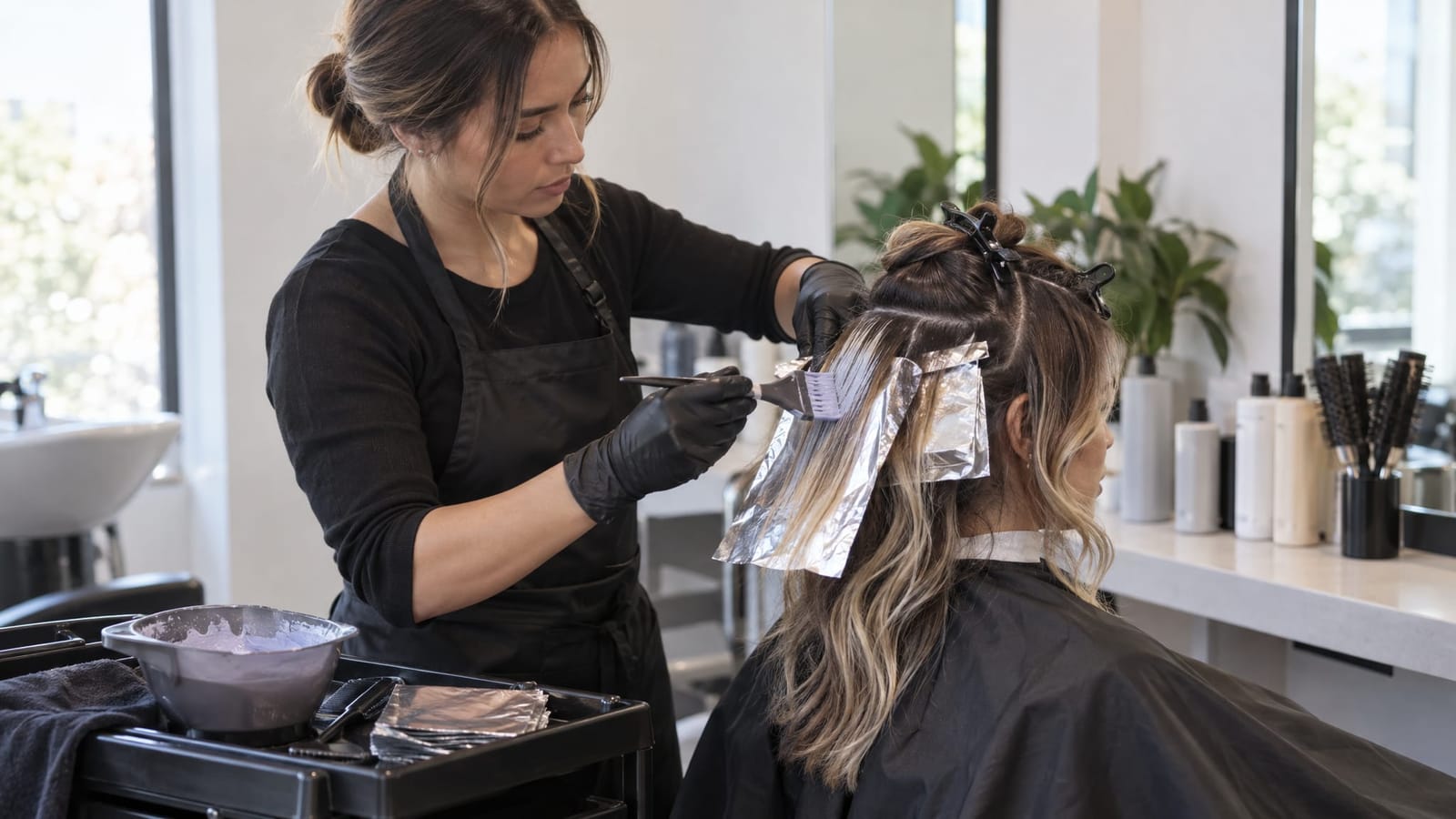
The main difference is that balayage is a highlighting technique, while ombre describes a color pattern. Balayage involves painting selected sections of hair to create lighter pieces among deeper tones. Ombre describes a transition from darker roots to lighter ends, with brightness concentrated across the lower lengths.
They are not opposites. A colorist can use balayage painting to help create an ombre effect. The useful question is less about choosing the right label and more about deciding whether you want ribbons of dimension, a noticeable dark-to-light gradient, or a combination of both.
Balayage vs. Ombre at a Glance
| Feature | Balayage | Ombre |
|---|---|---|
| What the term means | A freehand highlighting technique | A graduated color effect |
| Typical appearance | Lighter ribbons woven through a deeper base | Darker upper lengths transitioning into lighter ends |
| Where brightness starts | At varied points on selected sections | Around a planned transition area through the lengths |
| Overall impression | Dimension and individual pieces of light | A more continuous change from dark to light |
| Grow-out | Can blend softly when the natural root is retained | Can also grow out softly when the darker root matches the natural color |
Visual Difference: Ribbons of Light vs. a Color Gradient
Balayage keeps light and dark interspersed
Picture dark brunette hair with caramel pieces around the face and through the mid-lengths. Some strands remain deep brown, while others become progressively lighter toward the ends. That variation creates the dimensional appearance commonly associated with balayage.
Balayage does not have to be barely noticeable. Wider sections and greater contrast can create a bold result. What distinguishes the look is the placement of lighter pieces among darker hair, rather than an evenly lightened lower section.
Ombre concentrates the change toward the ends
Picture chestnut roots and upper lengths blending through warm brown into caramel ends. The lower portion reads as a lighter overall color, rather than a collection of separate highlights.
Ombre can be subtle or dramatic. A gentle brunette-to-light-brown transition looks softer than deep brown flowing into pale blonde. A visible gradient does not require a hard horizontal line. A blended transition separates a soft ombre effect from a deliberately sharp dip-dyed look.
Application Difference: The Technique Does Not Dictate the Entire Result
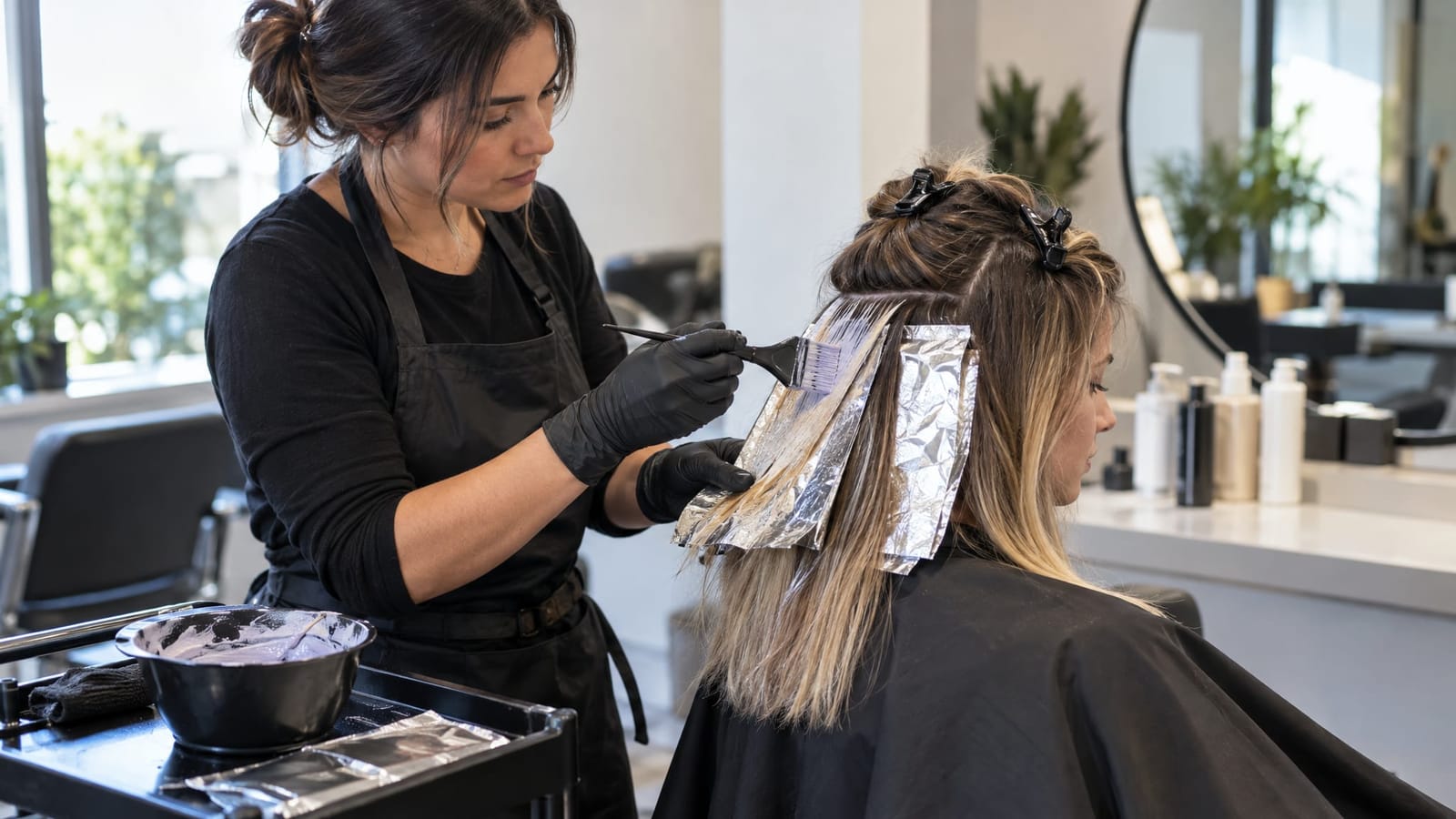
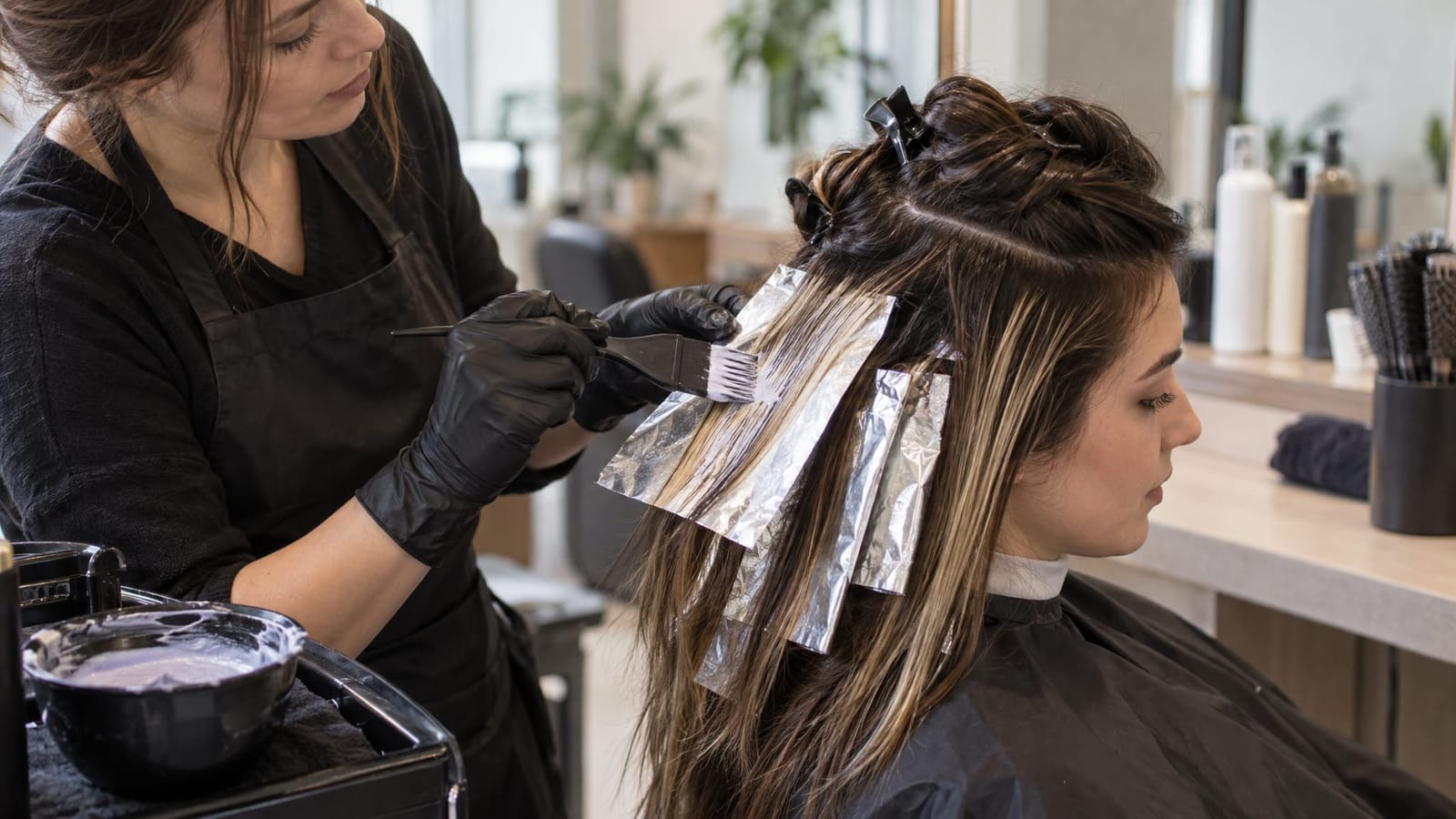
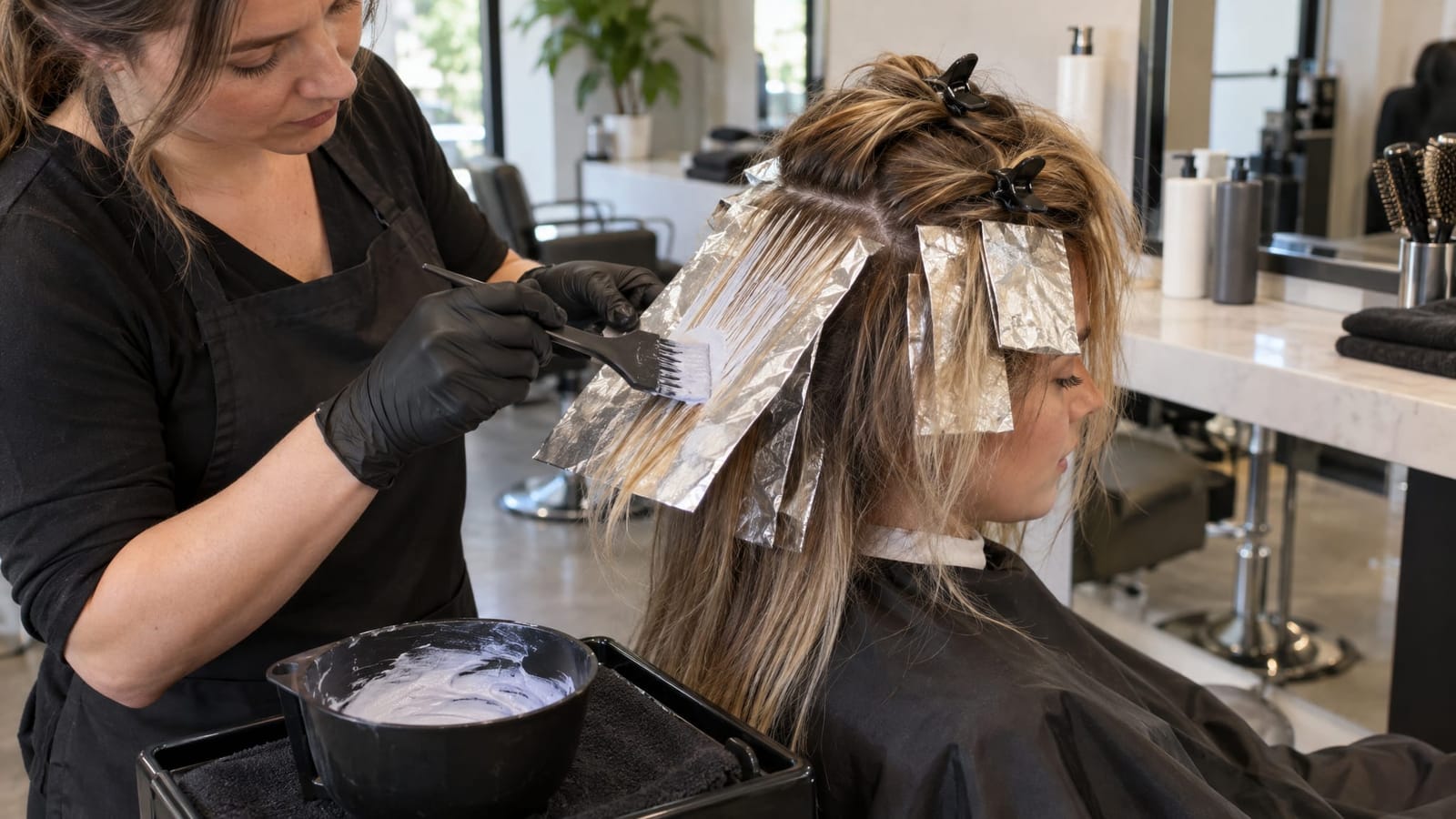
With balayage, a colorist paints selected sections, adjusting where the lightener begins and how much brightness builds toward the ends. Leaving darker hair between those sections helps preserve depth. Placement around the face can differ from placement through the back, so the result is not necessarily uniform.
For ombre, the main planning decision is where the darker color begins transitioning and how light the ends will become. A colorist can use painting or other highlighting methods to create that progression. The transition needs enough space to look gradual rather than abrupt.
At Salon Sanaa in Farmington Hills, we offer balayage, full and partial highlights, and toner/gloss services. Balayage painting can create scattered ribbons or contribute to an ombre-style gradient. A toner or gloss refines the shade of the lightened hair; it does not replace the placement that creates the pattern.
Which Look Suits Your Style?
Compare these preferences rather than assuming one option is always more natural or flattering:
- You want to keep plenty of your brunette base visible: A dimensional balayage look leaves deeper sections between the highlights.
- You want the ends to look distinctly lighter: Ombre puts more emphasis on the overall dark-to-light progression.
- You mainly want brightness around your face: Selective highlight placement matters more than a full ombre effect.
- You want both dimension and lighter ends: Balayage ribbons can blend into an ombre-style finish.
Length also affects the design. Longer hair provides more room for a gradual transition. On a shorter bob, that transition has less space, so the starting point and contrast become especially important. Short hair does not rule out either look, but a reference photo of waist-length hair may not translate directly.
Your usual styling matters, too. Compare photos with a similar haircut and texture, ideally shown both straight and curled. Waves can emphasize individual ribbons, while a straight finish makes the overall transition easier to see.
Maintenance: Neither Is Automatically Easier
Balayage is often associated with soft grow-out, but ombre can also be low-maintenance at the roots. The biggest factor is whether the root area stays close to your natural color. Changing the root shade or covering gray creates a separate maintenance need, regardless of the lighter pattern through the lengths.
The ends need attention in either design. A very light or cool-toned finish can require more tonal upkeep than a warmer shade closer to your starting color. Toning and adding new highlights are different tasks, so refreshing the shade does not always mean lightening the hair again.
Previously colored hair also affects the plan. Dark artificial color can make a lighter finish more involved than the reference photo suggests. Sharing your color history helps distinguish the desired look from the steps needed to work toward it.
Frequently Asked Questions
Can balayage or ombre work without going blonde?
Yes. Both can stay within a brunette palette. Chocolate hair with chestnut ribbons creates dimension, while deep brown transitioning into warm medium-brown ends creates a softer ombre effect. The pattern and the shade are separate choices.
Can existing highlights become an ombre look?
Often, yes, but the approach depends on their placement. Highlights close to the roots may need blending or added depth to establish a darker upper section. Existing lightened ends may already provide part of the desired gradient.
Is “sombre” different from ombre?
Sombre generally means a softer ombre, with less contrast between the darker and lighter areas. Because labels can describe different results, a photo is more useful than the term alone. Identify where you like the brightness to begin and how light you want the ends.
The Best Choice Starts With the Pattern You Want
Choose a balayage-style look for interspersed light and depth, an ombre effect for a clearer dark-to-light progression, or elements of both. The most useful reference shows your preferred placement, contrast, and tone, not just a hairstyle with the right label.