All Over Hair Color vs. Partial vs. Full Highlights: Which Service Is Right for You?
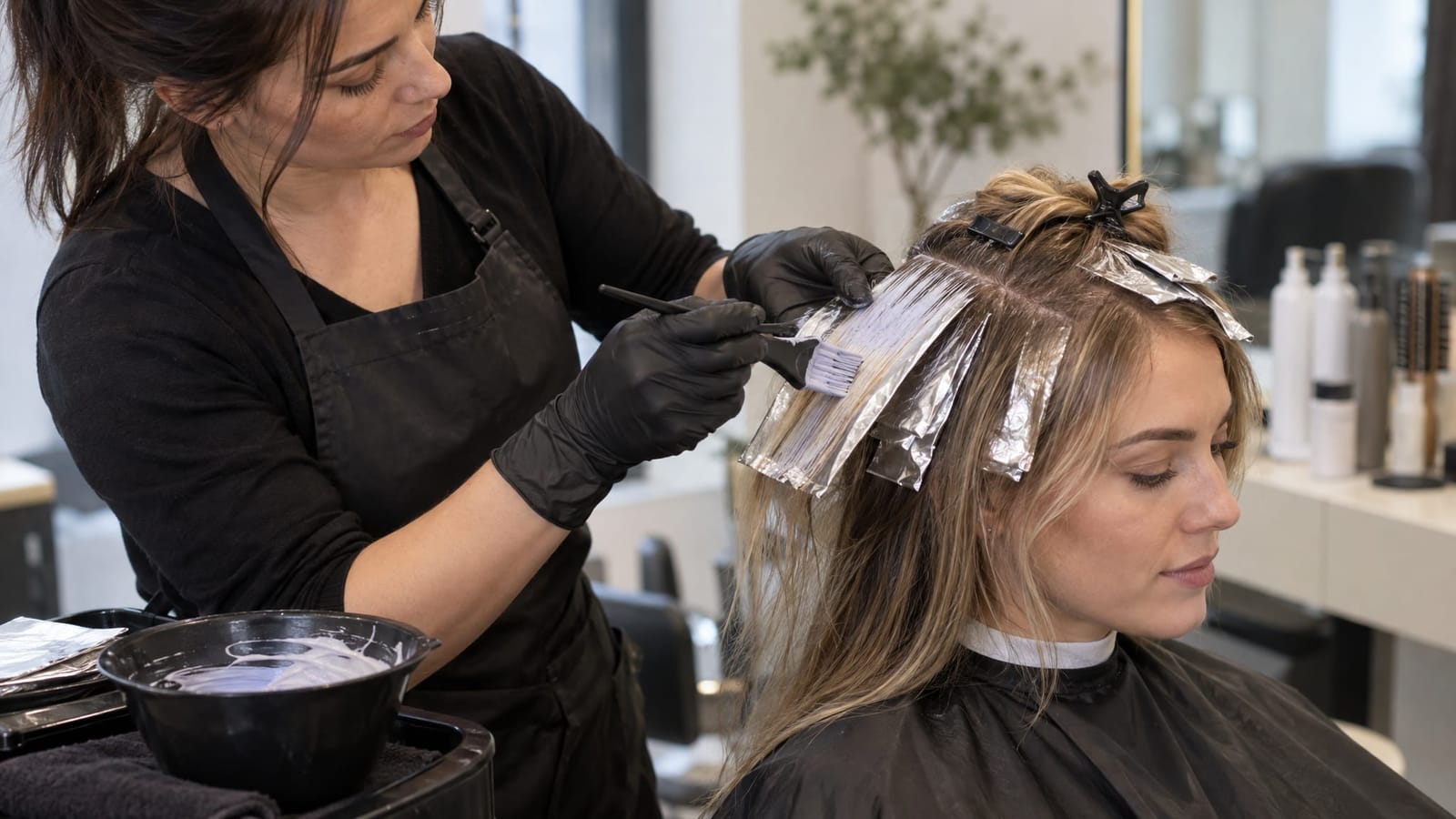
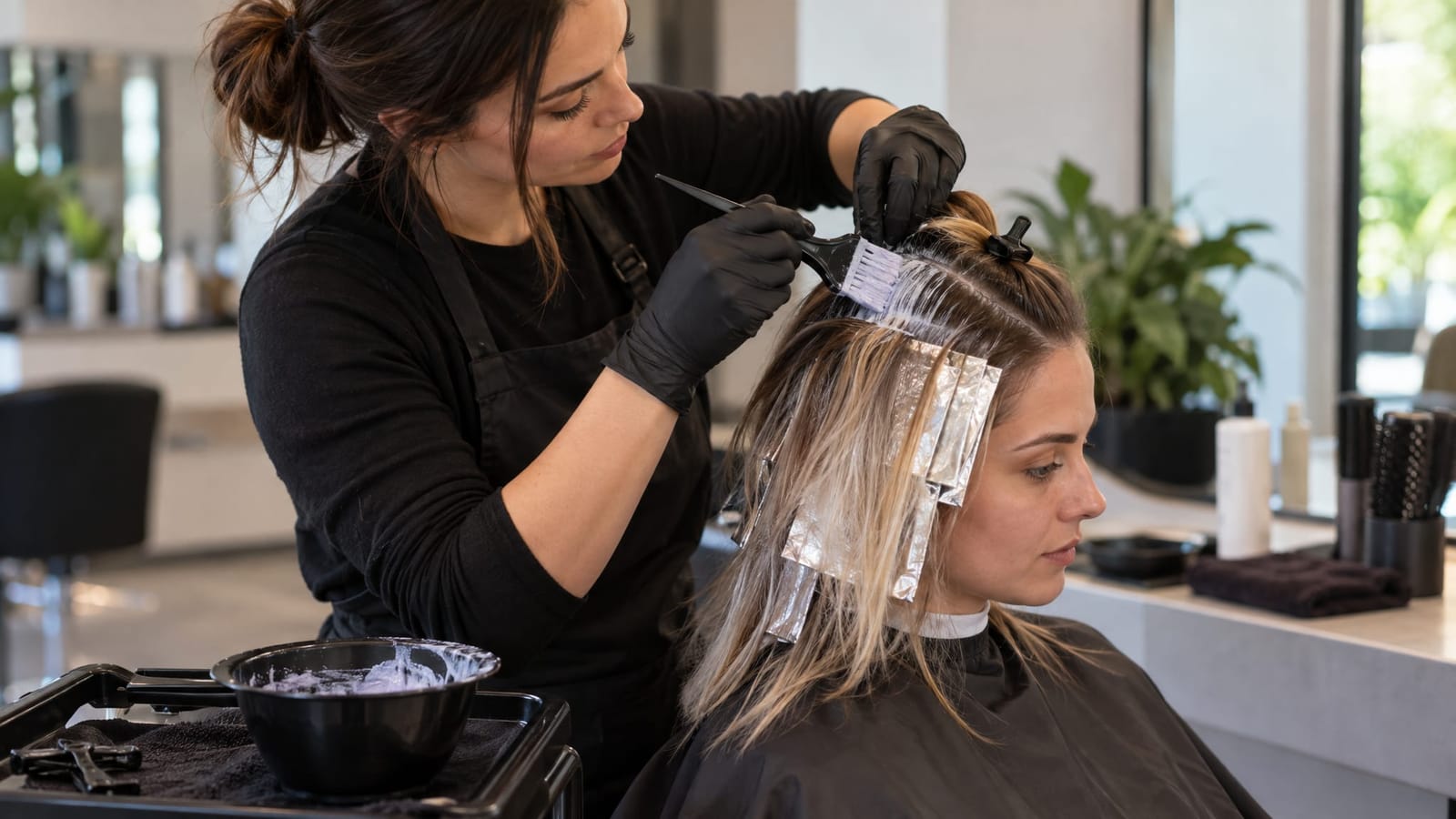
Choose all-over color when you want an overall shade change or a more uniform base color. Choose partial highlights when you want selective brightness, often around your face and through the top of your hair. Choose full highlights when you want lighter pieces distributed throughout your hair, including the sides and underneath.
The best choice depends on more than how light or dark you want to go. Gray coverage, previous color, how you wear your hair, and the regrowth you feel comfortable seeing all matter. At Salon Sanaa in Farmington Hills, we offer all three services, along with root touch-ups and toner/gloss services. Here is how the options compare.
All-Over Color, Partial Highlights, and Full Highlights at a Glance
| Comparison | All-over color | Partial highlights | Full highlights |
|---|---|---|---|
| Application | Color is applied across the hair rather than to selected strands. | Selected strands are lightened in targeted areas. | Selected strands are lightened throughout the head. |
| Main visual effect | A more consistent overall shade. | Focused brightness with more of the existing base visible elsewhere. | Brightness and dimension distributed through more sections. |
| Relationship to your base | Changes the base color across the treated hair. | Generally leaves the base between highlighted strands unchanged. | Also leaves base color between strands, with the amount depending on placement. |
| Gray-hair goal | Can provide coverage when the formula is chosen for that purpose. | Can blend gray visually in selected areas rather than cover every gray hair. | Can create broader gray blending, but does not automatically provide complete coverage. |
| Best starting goal | “I want a different overall color.” | “I like my base but want some brightness.” | “I want dimension throughout, not just on top.” |
These services are not always alternatives. A base color and highlights can work together when the goal is both gray coverage and dimension. That combination involves more than choosing one service from the table.
How Each Service Changes Your Hair
All-over color changes the overall shade
All-over color focuses on the hair as a whole rather than separating out individual strands. It suits goals such as changing a natural brunette to a richer brown, shifting the overall tone toward copper, or creating a more consistent base.
The formula matters as much as the application. Permanent color can be used for lasting base changes and gray coverage. Demi-permanent color generally deposits tone without the same lightening capability. Not every all-over formula performs the same job, especially when resistant gray or a lighter target shade is involved.
A more uniform color does not have to look flat. Your haircut, texture, existing variation, and chosen shade all influence the finished appearance. However, all-over color alone will not create the same deliberate light-and-dark pattern as highlights.
It also does not mean that permanent color needs to be reapplied from roots to ends at every appointment. Once the overall shade is established, the roots and previously colored lengths may need different treatment.
Partial highlights concentrate brightness where it matters most
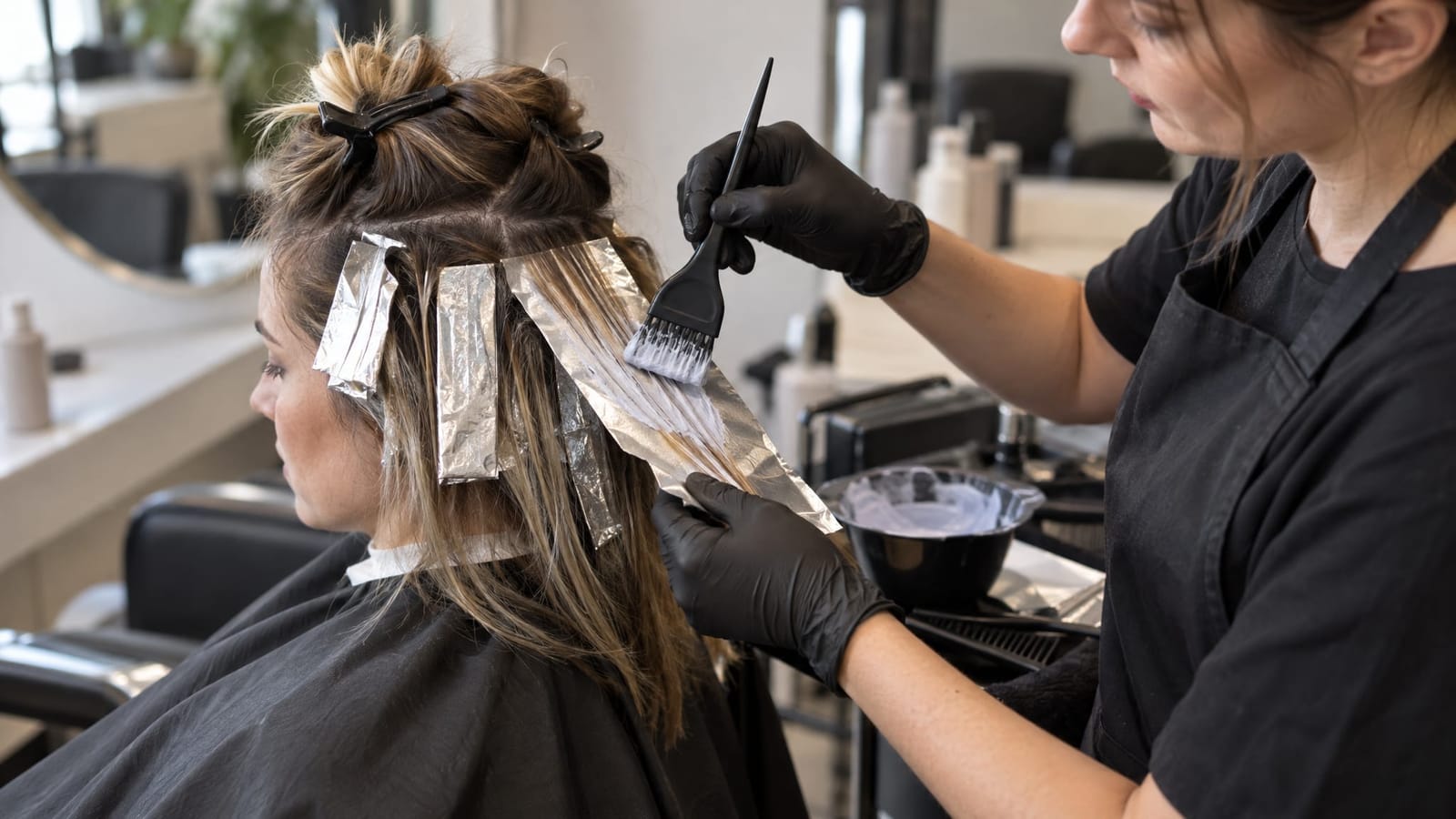
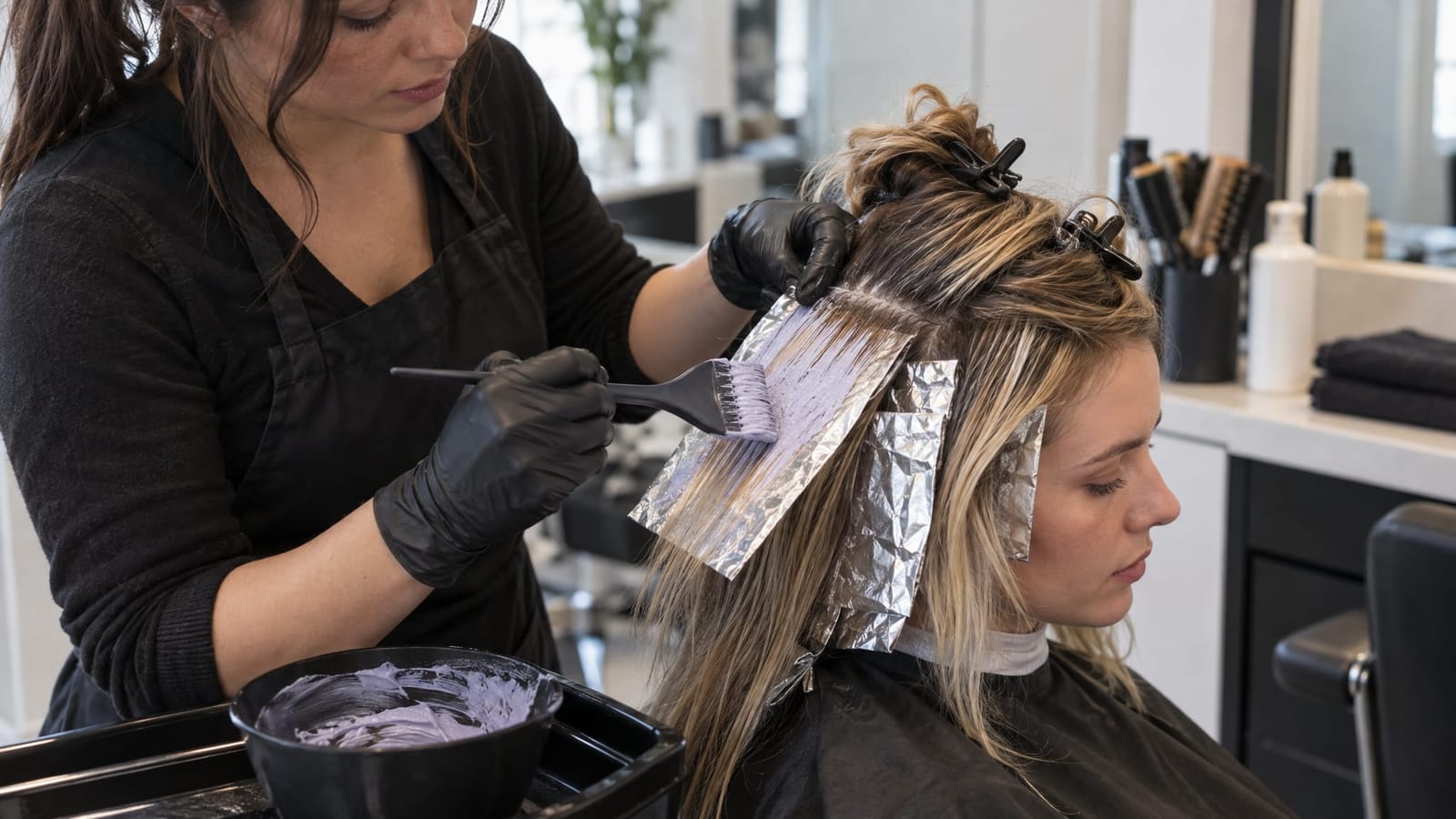
Partial highlights lighten selected strands in a limited area, commonly around the face, through the crown, and across the top. The placement follows the intended look rather than a fixed rule that exactly half the hair gets highlighted.
This is a useful option when you like your existing base and want a visible change without brightness throughout every section. Face-framing pieces can draw attention toward the front, while finer highlights through the top create a more blended effect.
The tradeoff is distribution. If the underneath sections remain darker, that contrast becomes more noticeable in a ponytail, bun, or half-up style. It can look intentional and attractive, but it may not match a goal of brightness from every angle.
Partial highlights also do not automatically mean subtle highlights. A concentrated, high-contrast face frame can look bolder than fine highlights placed throughout the head.
Full highlights distribute dimension throughout the hair
Full highlights extend placement across the head, including sections that a partial service may leave untouched. They suit a goal of more consistent dimension when the hair moves, parts differently, or goes up.
“Full” describes the distribution of the highlights, not the percentage of hair that becomes blonde. A full highlight can preserve plenty of depth, or it can create a much brighter overall appearance through denser placement. Strand size, spacing, and the amount of base left between sections shape the result.
Full highlights are also different from an all-over lightening service. They still work with selected strands rather than lightening every hair. For a closer look at placement, our comparison of full highlights vs. partial highlights explains why coverage area and overall brightness are separate decisions.
Compare the Maintenance, Not Just the First Appointment
A useful maintenance plan separates three needs: new growth, fading tone, and highlight placement. They do not always need attention at the same appointment. The contrast between your natural color and your finished color also matters more than the service name alone.
All-over color: maintain the roots without automatically recoloring the lengths
With permanent all-over color, new growth reveals your natural shade. A dark base against lighter gray roots can create a distinct line, while a shade close to your natural color produces a less obvious transition.
Once you like the overall color, a root touch-up can maintain the base without treating all the lengths as new hair. Faded ends may need a separate tonal refresh rather than another full application of the same formula.
The practical scheduling question is how much visible regrowth you prefer. Someone who wants gray roots consistently covered will need a closer maintenance rhythm than someone comfortable with a softer transition. Our guide to a Signature Root Touch Up in Farmington Hills explains the role of root-focused maintenance.
Partial highlights: maintain the most visible areas
Because partial highlights concentrate on selected sections, their maintenance often centers on the face frame, part, and crown. These areas can draw attention to regrowth even when much of the hair remains untouched.
Fine highlights close to your base color generally create less contrast as they grow than bold, pale pieces against a dark base. Choosing partial highlights therefore does not guarantee a low-maintenance result. Placement and contrast make the difference.
A partial service can also refresh the most visible sections after a previous full highlight. That works when the sides and underneath still have the brightness you want.
Full highlights: separate overall distribution from routine refreshes
A full highlight establishes brightness throughout the head, but repeating that entire placement at every visit is not always necessary. A maintenance plan can alternate more targeted appointments with broader highlighting when the underneath sections need attention again.
Highlights grow out rather than simply disappearing. Their tone can shift while the lightened strands remain. A toner or gloss addresses the tonal issue; it does not move highlights back toward the scalp or lighten new growth.
Our guide to how long hair highlights last explores the distinction between lasting lightness, changing tone, and visible regrowth.
Your Starting Color Can Change the Best Choice
If your hair already has darker color on it
Going lighter is not simply a matter of choosing a lighter all-over shade. Permanent color does not reliably lift previously deposited artificial color to the desired lighter result. Existing dark color can change the process substantially.
For example, moving from repeatedly colored dark brown hair to a light caramel result may involve lightening, tonal balancing, and a staged approach. It is a different task from adding caramel highlights to naturally lighter brown hair. Uneven bands or several layers of previous color can make color correction relevant.
If your main concern is gray
Decide whether you want coverage or blending. Coverage aims to make gray hair match a chosen base. Blending reduces the visual contrast between gray and the surrounding hair while allowing some gray to remain visible.
All-over color or root color fits the coverage goal when the formula is designed for it. Highlights can support blending, particularly when their placement works with the existing gray pattern. If you want both a solid base and lighter dimension, base color plus highlights is the more relevant comparison.
If your ends are already much lighter
Adding more highlights may not solve an imbalance between bright ends and darker roots. The better plan may focus on placement near the top, adjusting tone, or restoring some depth.
Similarly, taking very light hair significantly darker can require restoring underlying warm pigment rather than applying a dark shade alone. The desired finish and the starting canvas both shape the service.
Match the Choice to Your Everyday Styling
- You usually wear your hair down with the same part: Partial highlights can place brightness where it is most visible while preserving depth underneath.
- You regularly wear ponytails, buns, or change your part: Full highlights can distribute dimension into the sections those styles expose.
- You want a rich brunette or copper rather than a lighter look: All-over color is the more direct starting point. Highlights become relevant if you also want contrasting ribbons of brightness.
- You want longer gaps between color appointments: Favor a finished shade and placement with less contrast against your natural regrowth. A dramatic all-over change or bright face frame can require more upkeep than a softly blended result.
Think about appointment scope as well. Full highlights involve placement across more sections, but the complete service may also include base color, toner, or a cut. Comparing only “partial” with “full” can miss the work needed to achieve the same finished look.
What Helps Define the Right Color Plan
Before choosing a service, gather a few details that make the decision clearer:
- Your desired result: Identify what you like in an inspiration photo, such as the depth at the roots, brightness around the face, or warmth through the ends.
- Your color history: Include at-home color, previous lightening, and darker shades still present in the lengths.
- Your gray preference: Distinguish between covering gray completely and making it less noticeable.
- Your usual styling: Consider your everyday part, natural texture, and how often you wear your hair up.
- Your upkeep preference: Decide whether visible roots, warmer tone, or reduced brightness bothers you first. Each points to a different maintenance need.
At Salon Sanaa, our color services include all-over color, partial and full highlights, toner/gloss, and color correction. The useful distinction is what each service contributes to the result, rather than which name sounds most comprehensive.
The Best Choice Starts With the Change You Want
All-over color changes the overall base. Partial highlights focus brightness in selected areas. Full highlights spread dimension throughout the hair. From there, your starting color, gray-coverage goal, styling habits, and tolerance for regrowth refine the choice. A clear plan accounts for both the first result and the smaller services that will maintain it.